
close

Nicolas Xander

Automotive

Used Car Buying Myths That Can Lead to a Poor Choice

A late-model used car can offer equipment and comfort without the price of an equivalent new vehicle. But a lower asking price doesn’t establish value on its own. Familiar buying myths can distract from condition, sale terms and future costs. When browsing listings, the sticker is only the start.

Private sale is always cheaper

Private listings often look cheaper at first glance. The asking price is lower because there’s no lot and no warranty costs built in.

That gap shrinks fast when something fails a month later. Private sales usually don’t include a statutory warranty, so the buyer pays for parts and labor. A single transmission or cooling system fault can wipe out a thousand dollars in savings in one shop visit.

There’s also less comeback if the description was wrong. WA Consumer Protection explains that licensed dealer sales carry consumer guarantees and dealers can only sell cars with no money owing. Private sales do not carry the same consumer guarantees. That doesn’t mean private cars are bad buys. It means the price needs to cover extra risk and checks.

Treat due diligence as part of the price when comparing private and dealer cars. A history report and an independent inspection cost a little now. They protect against a repair bill that costs a lot later.

Haggling is the only way to get value

Many buyers think a good deal must involve a long back-and-forth. If the seller won’t drop the price, they walk away and feel cheated.

That instinct can backfire. A fixed, no-haggle price isn’t good or bad on its own. It’s only fair when it lines up with current market data. Buyers in Australia often check RedBook or Glass’s Guide for that reason. Valuation guides provide estimates under their stated assumptions, giving buyers a reference outside the seller’s asking price. They do not establish the completed sale price or condition of a particular car.

A useful car sale comparison includes repairs, registration, insurance and time alongside the asking price. Fixed pricing removes negotiation over the advertised vehicle price, but buyers still need written confirmation of fees, inclusions and any separate trade-in figure.

Trade-in numbers deserve the same test. Buyers get a clearer picture by pricing the trade-in separately from the purchase price.

Numbers that don’t line up are a reason to walk away.

Low mileage means a better car

Mileage gets too much weight. A low number on the dash feels safe, but it doesn’t say how those kilometers were done.

A car that spent years in stop-start traffic with short trips can have more wear on brakes and transmission than a higher-mileage car that cruised on highways with regular oil changes. Different trip patterns stress different components. Neither a highway history nor low-distance urban use establishes current condition without maintenance records and an inspection.

Service history matters more than the number. Stamped books and digital logs show regular care. Gaps in records or a dash reading that doesn’t match wear on seats and pedals should raise questions. Odometer tampering still happens, so buyers shouldn’t trust the display alone.

The clearest record is worth looking for. A low reading alone offers less reassurance.

A short test drive tells the full story

A shiny exterior can hide wear underneath. Paint and detailing don’t prove mechanical care.

A short drive cannot rule out faults. It won’t show slow oil leaks or a transmission that slips only when hot. It also won’t show past accident repairs that were filled and painted well. Suspension wear and hidden faults need a lift and a scan tool in trained hands.

That is where an independent pre-purchase inspection can provide information a drive cannot. A licensed mechanic checks the car on behalf of the buyer, not the seller. A PPSR search identifies registered security interests and may include recorded written-off and stolen status. It does not show odometer readings or the amount of debt. Service invoices and other records are separate evidence to review.

Get the inspection results in writing before committing. Dealer checks vary a lot. A basic safety check isn’t the same as a documented multi-point program. Certified programs cost more. Buyers should ask what was checked and keep a copy before paying a deposit.

Dealer finance and warranties are never worth it

Dealer finance has a bad name. Some buyers won’t even hear the quote because they assume the bank is always cheaper.

Compare loans on rate and total cost

Sometimes the bank is cheaper. Sometimes it isn’t. Dealer-arranged credit is another offer to assess rather than accept or reject automatically. Matching the amount, term, comparison rate, fees and final balance makes written quotes easier to compare.

Conditional pre-approval can provide a comparison point, but a full written quote is still needed. Total scheduled repayments, including any balloon, are different from an early payout balance. Neither a monthly payment nor a headline rate captures every fee and condition.

Read the warranty paper, not the pitch

The same logic applies to warranties. A vague promise means little. A written warranty that lists covered parts, time limits, claim steps and repair rules means a lot.

That document deserves a careful read. What’s covered? The time limit matters. So does who handles repairs. Without paperwork, the warranty is only talk.

This matters because purchase price isn’t the full cost. Registration, insurance, servicing and fuel often outweigh sticker savings over years of ownership. With online buying and nationwide delivery now common, paperwork and photos matter more than ever.

Good used-car buying starts with checking condition and price before signing. The lowest sticker alone doesn’t establish value.

read more
Automotive

Adding a Second Work Van: Three Scenarios That Shape the Decision

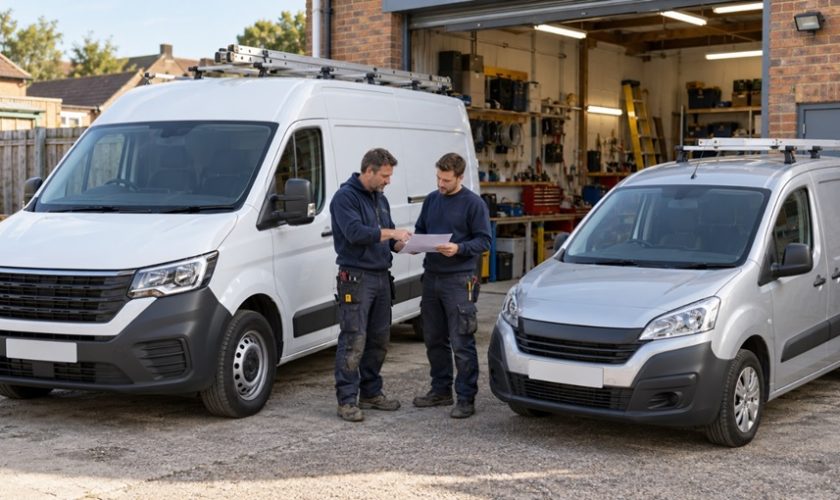
The diary has two jobs booked for Tuesday morning, but both teams need the same vehicle. Until recently, a few telephone calls and a rearranged appointment solved the problem. Now it happens every week. For a small business considering a second vehicle through a van lease, this is the moment to examine how the extra van would work. Another set of keys can create useful capacity, provided the people, equipment and workload are ready to support it.

The second van often has a different purpose from the first. It might free an experienced employee to work independently, carry materials between sites or support a separate service. Understanding that purpose helps prevent the business from simply ordering another version of the vehicle it already knows.

The following hypothetical scenarios show how different needs can lead to different decisions.

Scenario One: Two People Are Ready to Work Independently

An electrical contractor has grown from a sole trader into a small team. The owner and an experienced employee can each complete routine appointments, yet they still travel together because the business has one van.

A second vehicle could allow them to serve different customers simultaneously. However, transport is only one part of making that arrangement work.

The employee also needs the appropriate tools, test equipment, parts and job information. If essential items remain shared, the vans may spend their days meeting in car parks to exchange equipment.

Before choosing a vehicle, separate the work into tasks each person can complete independently. Identify which equipment must be duplicated and which specialist items can remain centrally managed.

The new van may not need to match the existing one. If one person mainly handles inspections and minor repairs while the other undertakes installations, their regular loads could be quite different.

The deciding question: Can the second driver complete a normal day without repeatedly returning to the first vehicle?

If the answer is yes, the business has a clearer operational reason for expanding.

Scenario Two: Collections Keep Interrupting Productive Work

A joinery business has enough people on site, but someone regularly leaves to collect fixings, deliver finished components or move equipment.

The main van carries installation tools and materials. Using it for small errands means unloading, rearranging or leaving the site without items the team still needs.

Here, the second vehicle’s role may be support rather than another complete installation setup.

Study the collection journeys before specifying the van. Small parcels and occasional tool cases create a different requirement from long lengths of timber or bulky finished furniture.

A compact vehicle may deserve consideration if the actual loads allow it. Equally, choosing too little capacity could recreate the same transport problem in a different form.

When discussing options with SwissVans.com, describe the journeys that currently interrupt the team. Include typical items, their dimensions and who would drive. This makes the enquiry more useful than requesting a duplicate of the existing van.

There is also a scheduling question. Some collection runs may disappear when orders are consolidated or materials are delivered directly. Review those possibilities before building a permanent vehicle requirement around avoidable trips.

The deciding question: How much working time would the additional vehicle release after sensible scheduling improvements?

Scenario Three: A New Service Needs Its Own Setup

A property maintenance company begins offering a specialist cleaning service. Its existing van is arranged around repair tools, while the new work requires machines, hoses and consumables.

Constantly swapping equipment is possible at first. As bookings increase, the changeover becomes inconvenient, and items occasionally reach the wrong job.

A dedicated vehicle could provide a consistent setup. The specification should follow the new service’s requirements, including equipment dimensions, weight and suitable storage.

Any proposed installation needs careful discussion with the provider and a competent installer. Confirm permissions, fitting methods and any requirements for returning the vehicle later.

The commercial question is whether the service has enough dependable demand. Enquiries and confirmed bookings should be recorded separately. One promising conversation offers less certainty than a sequence of completed jobs and repeat customers.

The deciding question: Is this an established workload needing transport, or an untested idea that would create a new ongoing commitment?

Before Ordering, Run a Two-Van Diary

For a fortnight, plan work as though the second vehicle already exists.

Assign a driver, equipment and route to each van. Record occasions when both need the same machine, when a driver is unavailable or when the additional vehicle would sit unused.

This exercise can expose practical gaps before money is committed. It also produces a more realistic estimate of each vehicle’s mileage.

Avoid dividing the current mileage equally without examining the routes. One van might handle local appointments while the other covers distant installations.

At the same time, request a complete written quotation and establish the agreement’s initial payment, ongoing rentals, duration, mileage terms and end arrangements. Include insurance, equipment and preparation in the overall assessment.

Make Responsibility Clear From the Start

Two vehicles bring more coordination. Decide who books servicing, checks condition, reports faults and manages keys. Allocate regular stock checks so both vans carry what their drivers expect.

Give the new arrangement time to settle, then review completed work, unnecessary journeys and unused capacity.

The strongest reason to add a second van is a specific job it can perform repeatedly. When that job, its driver and its equipment are already clear, the vehicle becomes a practical next step in the business’s growth.

read more
Vehicles

How Vehicle Manufacturers Are Improving Accessibility for Different Passengers

The freedom to travel independently is a fundamental pillar of modern life, deeply tied to personal autonomy, career opportunities, and social connection. For decades, the automotive industry engineered vehicles around a remarkably narrow definition of the average driver. If you fell outside of that specific physical or cognitive baseline, securing reliable personal transportation meant relying on expensive, third-party aftermarket modifications that often compromised the safety and aesthetic integrity of the vehicle.
Today, a profound paradigm shift is reshaping automotive engineering. Driven by shifting demographics, advocacy from disability rights groups, and rapid advancements in software and robotics, major vehicle manufacturers are moving away from reactive modifications. Instead, they are embracing universal design, integrating accessibility directly into the factory blueprint. From physical entry hardware to sensory-friendly cabins and autonomous driving systems, automakers are finally recognizing that a truly premium vehicle is one that accommodates the diverse needs of all its passengers.

Revolutionizing Physical Entry and Egress

The most immediate barrier to automotive independence for individuals with limited mobility is the simple act of getting into and out of the cabin. Historically, wheelchair users were forced to purchase standard vans and send them to specialized fabrication shops to have the floors cut and dropped, a process that took months and cost tens of thousands of dollars.
Modern manufacturers have started forming strategic partnerships with mobility companies to streamline this process, and in some cases, are engineering vehicles with accessibility in mind from day one. Adaptive air suspension systems are becoming a crucial feature for accessible transport. Originally designed for luxury ride comfort and off-road clearance, engineers have repurposed air suspension to include a kneeling function. With the press of a button, the vehicle exhausts air from its suspension bladders, drastically lowering the ride height. This minimizes the angle of deployment for wheelchair ramps and reduces the step-in height for elderly passengers or those with joint pain, making the transition from a curb to a car seat seamless.
Furthermore, automakers are rethinking door and seating geometry. Vehicles are increasingly being designed with wider door apertures and pillarless entries, where the traditional central B-pillar is eliminated to create a massive, unobstructed opening. Inside the cabin, power swivel seating is moving from a niche medical add-on to a factory-optioned convenience. These seats automatically rotate outward toward the open door and gently lower toward the pavement, allowing passengers to transfer from a wheelchair or walker directly into the seat before being lifted smoothly back into the cabin.

Reimagining the Driver’s Seat and Primary Controls

Getting behind the wheel presents an entirely different set of challenges for drivers with limb loss, neuropathy, or paraplegia. The traditional configuration of a steering wheel, gas pedal, and brake pedal requires constant, coordinated use of all four extremities.

The Shift to Drive-by-Wire Technology

In the past, adaptive driving controls relied on heavy, mechanical metal rods bolted to the pedals and steering column. These setups required significant upper body strength to operate safely and often interfered with airbag deployment zones. Today, the automotive industry is rapidly transitioning to drive-by-wire systems. In a drive-by-wire vehicle, there is no physical mechanical connection between the steering wheel, the pedals, and the engine or brakes. Instead, driver inputs are converted into electronic signals that command the vehicle’s mechanical components.
This technology is an absolute game-changer for accessibility. Because the inputs are entirely electronic, the physical force required to accelerate, brake, or steer can be scaled down to near zero. Drivers with limited muscle strength can operate a two-ton vehicle using a highly sensitive, customizable joystick mounted to the center console. The resistance and feedback of these digital controls can be programmed to match the exact physical capabilities of the individual driver, providing a safe and effortless driving experience.

Voice Command and Secondary Systems

Operating secondary controls like windshield wipers, turn signals, headlights, and climate control can be exceptionally difficult for drivers using hand controls, as they cannot safely remove their hands from the steering apparatus. Automakers are solving this through the heavy integration of advanced, natural-language voice assistants. Rather than fumbling for a plastic stalk behind the steering wheel, a driver can simply instruct the vehicle to turn on the high beams, increase the cabin temperature, or activate the hazard lights. By removing the need for fine motor skills, manufacturers are allowing drivers to maintain total focus on the road.

Interface and Infotainment Accessibility

The automotive industry’s obsession with massive, glossy touchscreens created a sudden and severe accessibility crisis. While sleek and futuristic, smooth glass panels offer absolutely zero tactile feedback. For visually impaired passengers, elderly users with reduced vision, or individuals with hand tremors, navigating a flat touchscreen to adjust the radio or air conditioning while the vehicle is in motion is nearly impossible.
Recognizing this misstep, automotive interior designers are implementing a hybrid approach to cabin interfaces. There is a concerted movement back toward keeping critical functions tied to physical, heavily textured dials and switches that can be operated purely by touch and muscle memory.
For the digital displays that remain, software-level accessibility is being radically improved. Modern infotainment systems now feature screen-reading technology similar to what is found on smartphones, providing audio feedback as the user navigates through menus. High-contrast display modes, scalable typography, and colorblind-friendly interface palettes are becoming standard options hidden just beneath the surface of the main settings menu. Furthermore, deep integration with smartphone mirroring ensures that the specific accessibility settings a user relies on every day instantly translate to the dashboard screen the moment they enter the vehicle.

Designing for Sensory and Cognitive Diversity

Accessibility extends far beyond physical mobility. A significant portion of the population lives with neurodivergent conditions, such as autism spectrum disorder or severe sensory processing disorders. For these passengers, the interior of a vehicle can be a chaotic, overwhelming environment filled with harsh vibrations, flashing lights, and piercing acoustic alarms.
Manufacturers are now employing neuro-inclusive design principles to create calmer, more predictable cabin environments. Acoustic engineering has taken center stage. Automakers are utilizing active noise cancellation technology—which works exactly like high-end headphones by emitting sound waves that neutralize road noise—paired with acoustic laminated glass to create an isolation chamber that protects passengers from the sensory overload of highway traffic.
Interior lighting is also being engineered with cognitive comfort in mind. Harsh, strobe-like alerts are being replaced by soft, tunable ambient lighting that can be adjusted to specific hues known to reduce anxiety and promote calmness. Even the vehicle’s warning systems are being rethought. Instead of a jarring, high-pitched beep to warn of a lane departure or an approaching object, vehicles are utilizing localized haptic feedback, vibrating the specific side of the driver’s seat to silently and gently indicate danger without inducing panic.

The Autonomous Horizon and Advanced Driver Assistance

The most transformative accessibility developments are happening within the realm of Advanced Driver Assistance Systems (ADAS). Features initially designed to reduce highway fatigue are proving to be powerful tools for drivers with slower reaction times, limited neck mobility, or reduced peripheral vision.
Automated parking systems allow a driver who cannot physically twist around in their seat to perfectly parallel park with the press of a single button. Blind-spot monitoring systems act as a reliable second set of eyes, while automatic emergency braking provides a critical safety net for drivers who may suffer from joint stiffness that delays their ability to stomp on the brake pedal.
Ultimately, the natural progression of these systems leads to fully autonomous, Level 5 self-driving vehicles. While still in the developmental and regulatory stages, autonomous robotaxis and purpose-built shuttles represent the holy grail of automotive accessibility. A vehicle with no steering wheel or pedals removes the concept of the driver entirely. When cars can reliably navigate themselves, individuals who are legally blind, paralyzed, or living with severe cognitive impairments will finally have access to on-demand, private, unassisted transportation.
The automotive industry is in the midst of a profound ethical and technological awakening. By shifting the focus from the mythical average driver to the diverse realities of the human condition, manufacturers are doing more than just selling cars. They are engineering equity, tearing down the physical and digital barriers that have historically kept millions of people on the sidelines, and paving the way toward a future where the open road belongs to everyone.
read more
Used Car

How to Find Dependable Used Cars for First-Time Working Professionals

Stepping into your first professional role brings a wave of new responsibilities, and few are as critical as consistently showing up on time. While the allure of a brand-new vehicle is strong, signing up for a massive car payment and premium insurance rates right out of the gate can cripple your early-career financial flexibility. For most first-time working professionals, acquiring a dependable used car is the smartest economic decision you can make.

However, the used car market can feel like a minefield. Separating a reliable daily commuter from a polished liability requires strategy, patience, and a refusal to let emotion drive your purchase. By approaching this process as a calculated business transaction rather than a lifestyle upgrade, you can secure a vehicle that supports your career without draining your bank account.

Setting a Comprehensive and Bulletproof Budget

The most common mistake first-time buyers make is equating their budget solely with the sticker price or the monthly loan payment. A vehicle is a depreciating asset with ongoing operational costs. If you stretch your budget to the absolute limit just to buy the car, you will be entirely unprepared to actually keep it on the road.
Before you look at a single vehicle, secure pre-approved financing from a local credit union or your primary bank. Walking into a dealership or a private sale with your financing already in place transforms you into a cash buyer. This prevents the finance office from manipulating the loan term to hit a monthly payment target while quietly inflating the overall interest you pay.
As you define your budget, factor in the hidden costs of ownership. Research insurance premiums for the specific models you are considering, as rates for younger drivers can vary wildly between a sensible sedan and a sporty coupe. Earmark a dedicated emergency fund of at least one thousand dollars specifically for immediate post-purchase maintenance. Even the most carefully vetted used car will likely need a fresh set of tires, a battery replacement, or new brake pads within the first year of ownership.

Identifying the Right Vehicle Profile for Your Career

Your first professional vehicle is a tool designed to facilitate your career. It needs to match your daily operational reality, not necessarily your aesthetic ideals.
Take a hard look at your actual commute. If you are navigating an hour of stop-and-go city traffic and squeezing into tight municipal parking garages, a massive SUV or a heavy-duty pickup truck will be an endless source of frustration and fuel expense. Conversely, if your role requires regional travel across poorly maintained highways in harsh winter weather, a subcompact car might leave you stranded or fatigued.
Avoid the depreciated luxury trap at all costs. It is incredibly tempting to buy a ten-year-old European luxury sedan that now costs the same as a slightly used Honda Civic. While the purchase price may be identical, the maintenance costs remain at luxury levels. An entry-level professional does not need the financial stress of a complex engine repair that costs more than the car is currently worth. Stick to historically reliable brands with abundant, inexpensive replacement parts and a reputation for longevity.

Strategically Sourcing Your Vehicle

Where you buy your car dictates the level of risk you are assuming and the premium you will pay for peace of mind.

Certified Pre-Owned Programs

For those who want maximum reliability and are willing to pay a slight premium, Certified Pre-Owned (CPO) vehicles sold through franchised dealerships are an excellent starting point. These cars are typically lease returns that are only a few years old, have low mileage, and have passed a rigorous manufacturer-mandated inspection. Most importantly, they come with an extended factory warranty that protects you against catastrophic mechanical failures during your first few years in the workforce.

Private Sellers and Independent Lots

If you are working with a tighter cash budget, the private market is where the best deals live. Buying directly from an individual owner eliminates the dealership overhead and commission. Look for private sellers who have owned the car for several years and can produce a thick folder of maintenance receipts.
Be highly cautious of independent, unfiltered used car lots that offer “buy here, pay here” financing. These establishments often source their inventory from the bottom tier of dealer auctions, buying vehicles with sketchy histories that franchised dealerships refused to put on their own lots.

The Non-Negotiable Screening Process

Never take a seller’s word for the condition of a vehicle. A freshly detailed car with glossy paint can easily hide structural damage, neglected maintenance, or a failing transmission.

Securing the Vehicle History Report

Before leaving your house to look at a car, demand the Vehicle Identification Number (VIN) and run a comprehensive history report. You are looking for a clean title, free of salvage, flood, or rebuild brands. The report will also reveal if the car has been in major accidents, how many owners it has had, and whether it was previously used as a rental car. A vehicle with four owners in the last three years is a massive red flag, indicating that people keep buying it, discovering a major flaw, and quickly getting rid of it.

The Crucial Pre-Purchase Inspection

This is the single most important step in the entire car-buying process. Once you find a vehicle you like and negotiate a tentative price, make the final sale contingent on a Pre-Purchase Inspection (PPI) performed by an independent, certified mechanic of your choosing.
A thorough PPI usually costs between one and two hundred dollars. The mechanic will put the car on a lift, check for hidden rust, inspect the suspension components, look for fluid leaks, and scan the engine’s computer for recently cleared error codes. If the seller or dealership refuses to let you take the car for an independent inspection, walk away immediately. They are hiding something. Paying for a PPI that reveals a failing transmission is not wasted money; it is the best financial investment you will ever make because it saves you from buying a disaster.

Mastering the Test Drive

The test drive is not a joyride; it is a diagnostic session. Ask the seller not to start the car before you arrive. A cold engine reveals a multitude of sins that a warmed-up engine will hide, such as rattling timing chains or exhaust smoke.
Turn off the radio and the air conditioning so you can listen to the machine. As you drive, pay attention to how the transmission shifts. It should move through the gears smoothly, without hesitation, clunking, or aggressive jerking. Find a safe stretch of highway and accelerate to merging speeds to check for steering wheel vibrations, which indicate alignment or suspension issues. Finally, find an empty parking lot and apply the brakes firmly to ensure the car stops in a straight line without a grinding noise or a spongy pedal feel.
Your early career should be focused on professional growth, building your network, and mastering your industry, not stressing over whether your car will start in the morning. By prioritizing financial discipline, thoroughly screening your options, and demanding independent mechanical verification, you can secure a vehicle that acts as a reliable foundation for your new professional life. Remember that your greatest point of leverage in any vehicle transaction is your willingness to simply walk away. The right car is out there, and taking the time to find it will pay dividends for years to come.
read more
Logistics

How Logistics Businesses Can Manage Unexpected Supply Chain Interruptions

The modern supply chain operates as a hyper-connected, globally synchronized web. When perfectly calibrated, it is an absolute marvel of efficiency, moving millions of tons of freight across oceans, borders, and continents with mathematical precision. However, this intricate synchronization is also its greatest vulnerability. A localized severe weather event, a labor strike at a major port, a sudden raw material shortage, or a geopolitical conflict can send immediate, cascading shockwaves through the entire system.
For logistics businesses, relying on the assumption that operations will run according to a predefined schedule is no longer a viable strategy. The companies that thrive in the current landscape are not those that completely avoid disruptions—that is an impossible goal. Instead, the industry leaders are those who build resilient, elastic networks capable of absorbing sudden shocks and pivoting almost instantly. Achieving this level of agility requires a fundamental shift away from reactive troubleshooting toward proactive, strategic preparedness.

Escaping the Blind Spots with Total Visibility

You cannot manage a crisis you cannot see. Historically, logistics companies operated with significant blind spots, relying on delayed milestone updates and manual check-ins to track freight. By the time a delay was formally reported, the opportunity to mitigate its impact had already vanished.
Today, managing unexpected interruptions requires absolute transparency across every tier of the network. This means moving beyond basic track-and-trace capabilities and establishing a supply chain control tower. This centralized hub aggregates data from carriers, freight forwarders, warehouse management systems, and third-party vendors into a single pane of glass. When a logistics provider has end-to-end visibility, a delay at a European terminal is immediately visible to the distribution center in the American Midwest, allowing warehouse managers to adjust labor schedules and reallocate cross-docking space before the delay causes a local bottleneck.

Implementing Predictive Analytics

Total visibility is not just about knowing where a container is right now; it is about knowing where it will be tomorrow. By integrating predictive analytics and machine learning into their transportation management systems, logistics businesses can monitor external variables like approaching weather systems, regional traffic patterns, and port congestion indices. These intelligent systems can automatically flag shipments that are at high risk of delay and suggest alternative routing options before the cargo is physically trapped in a backlog.

Moving Away from Single-Source Dependency

The pursuit of rock-bottom procurement and transportation costs led many companies to consolidate their operations, relying on a single overseas region for manufacturing and a single primary carrier for freight distribution. While this model looked fantastic on a spreadsheet during periods of stability, it created massive single points of failure. If your only major ocean carrier experiences a cyberattack or a capacity crunch, your entire supply line freezes.
Building resilience requires a deliberate diversification strategy. Logistics businesses must actively cultivate relationships with a wide variety of regional and global carriers to ensure alternative capacity is always available. Multi-sourcing should also apply to the physical routing of goods. Instead of funneling all West Coast imports exclusively through the ports of Los Angeles or Long Beach, strategic logistics providers split their volume, routing a percentage of cargo through the Pacific Northwest or the Gulf Coast. If one port experiences a sudden labor dispute, the company already has established routing protocols and relationships at alternative entry points.

The Rise of Nearshoring and Multi-Modal Transport

To shorten supply lines and reduce exposure to transoceanic disruptions, many businesses are shifting toward nearshoring—moving production and distribution hubs closer to the final consumer market. For a logistics company serving North America, this often means expanding operations into Mexico or scaling up domestic rail and trucking networks. Furthermore, maintaining the flexibility to switch seamlessly between transportation modes—such as moving urgent freight from rail to over-the-road trucking when rail yards become congested—is a critical defense mechanism against sudden route closures.

Rethinking the Just-in-Time Inventory Model

For decades, the “Just-in-Time” (JIT) inventory model was the gold standard of supply chain management. By keeping warehouse stock to the absolute minimum and relying on perfectly timed deliveries, companies drastically reduced their inventory carrying costs. However, JIT operates with zero margin for error. A single delayed truck can halt a manufacturing assembly line or leave retail shelves empty.
Managing unpredictable interruptions requires a shift toward a “Just-in-Case” mindset. This does not mean returning to the inefficient days of overstuffed, disorganized warehouses. Rather, it involves calculating the precise cost of a stockout versus the cost of holding inventory, and strategically increasing safety stock for the most critical, high-margin, or high-risk components. Logistics providers must help their clients identify which SKUs are most vulnerable to global shocks and dedicate warehouse space specifically to buffer those exact items. Having a strategically calculated reserve of critical inventory acts as a shock absorber, buying the supply chain precious days or weeks to find alternative routing solutions when a disruption occurs.

Cultivating Collaborative Supplier Relationships

During a major supply chain crisis, capacity becomes the most valuable currency in the world. When ocean space is booked solid and truck drivers are in impossibly high demand, carriers and suppliers have the leverage to choose whose freight they move first. If a logistics business treats its vendors purely as transactional commodities—constantly squeezing them for lower rates and penalizing them for minor infractions—those vendors will not go out of their way to help when a crisis hits.
True resilience is built on strong, collaborative partnerships. Logistics companies must shift from a transactional mindset to a relational one. This involves signing longer-term contracts that guarantee consistent volume for carriers, engaging in joint business planning, and maintaining open, honest lines of communication. When you treat a carrier as a true strategic partner during the quiet periods, they are significantly more likely to prioritize your freight, offer emergency capacity, and work collaboratively to solve routing nightmares during a massive industry disruption.

Formulating a Concrete Contingency Plan

Panic is the enemy of effective logistics management. When a disruption occurs, time spent agonizing over how to respond is time wasted. The most resilient organizations do not wait for a crisis to figure out their backup plans; they develop detailed, actionable playbooks long before the sky turns gray.
A robust contingency plan clearly defines who has the authority to make emergency routing decisions, what the communication protocols are with end-customers, and which alternative vendors to activate. Decentralized decision-making is critical here. If every emergency reroute requires approval from a global vice president who is asleep in another time zone, the opportunity to secure backup capacity will be lost. Empowering floor-level managers and regional directors to execute pre-approved contingency budgets ensures a rapid, fluid response.

Stress-Testing the Network

A contingency playbook is useless if it simply gathers dust on a hard drive. Logistics companies must regularly stress-test their supply chains through scenario planning and tabletop exercises. Management teams should gather quarterly to simulate severe disruptions—such as a total shutdown of their primary distribution center, a massive spike in fuel prices, or a sudden loss of their largest trucking partner. These wargaming exercises expose hidden vulnerabilities in the supply chain, allowing the company to patch those holes in a controlled environment rather than discovering them during a live crisis.
Interruptions will always be a fundamental reality of moving physical goods across a complex, unpredictable world. Logistics businesses can no longer afford to operate with rigid, brittle networks optimized solely for fair-weather efficiency. By investing in end-to-end visibility technology, diversifying their routing strategies, maintaining strategic buffer inventories, and treating carriers as vital partners, logistics providers can transform their ability to handle disruptions. Ultimately, the capacity to navigate chaos smoothly is no longer just a defensive measure; it is a profound competitive advantage that wins client trust and drives long-term market dominance.
read more
Driving Tips

How to Prepare for Unexpected Detours During Long-Distance Driving Trips

Long-distance driving offers a sense of freedom that few other modes of travel can match. There is an undeniable thrill in loading up the trunk, settling into the driver’s seat, and pointing your tires toward a destination hundreds or thousands of miles away. However, the open road is inherently unpredictable. A major interstate collision, a sudden flash flood, a washed-out bridge, or unexpected highway construction can instantly turn your carefully planned route into a frustrating standstill.
When the flashing detour signs point you toward unfamiliar backroads, your level of preparation will dictate whether the reroute is a minor inconvenience or a massive ordeal. Preparing for these inevitable deviations requires more than just a full tank of gas; it demands a strategic combination of mental flexibility, analog backups, and practical emergency supplies.

Cultivating the Right Road Trip Mindset

Before you pack a single bag, you need to adjust your expectations. The most common mistake drivers make on long journeys is treating the estimated time of arrival on their navigation system as a hard, unbreakable deadline. This creates artificial pressure. When a detour forces you off the highway and adds two hours to your travel time, that pressure quickly morphs into stress, driving fatigue, and poor decision-making behind the wheel.
To combat this, build intentional buffer time into your itinerary. If the drive takes ten hours under perfect conditions, plan for twelve or thirteen. This built-in margin of error allows you to navigate rural country roads, wait for a pilot car through a construction zone, or sit in unexpected traffic without the anxiety of missing a hotel reservation. Recognize from the outset that detours are not anomalies; they are a standard component of cross-country travel. When you expect delays, they lose their power to ruin your mood.

Bridging the Gap Between Digital and Analog Navigation

We live in an era where smartphone navigation apps are incredibly reliable, constantly updating with real-time traffic data, speed traps, and road closures. But technology has its limitations, and those limitations usually expose themselves exactly when you are forced off the main highway and into rural or mountainous territory where cellular service is virtually nonexistent.

Downloading Offline Maps

Your primary defense against getting lost in a cellular dead zone is pre-downloading your route. Before leaving your driveway, utilize the offline map feature in your preferred navigation app. Download the map data not just for your specific route, but for a massive geographic radius surrounding it. If a highway closure forces you fifty miles east into unfamiliar terrain, your phone will still be able to utilize its internal GPS receiver to plot a course on the downloaded map, even without a single bar of cellular data.

The Non-Negotiable Paper Atlas

Even with offline digital maps, hardware can fail. Phones overheat on sunny dashboards, charging cables break, and applications occasionally crash. This is why a physical, recently updated road atlas is a mandatory piece of equipment for any long-haul driver. When you are routed onto a dusty county road that your digital map insists is a multi-lane highway, a paper atlas provides a wide-angle view of the region that a small smartphone screen simply cannot offer. It allows you to cross-reference local town names, identify major geographical barriers like rivers or mountain ranges, and confidently plot a manual course back to civilization.

Safeguarding Your Vehicle’s Operational Range

A detour often means leaving the convenience of modern highway infrastructure behind. You may find yourself driving through isolated stretches where gas stations are closed for the night, out of fuel, or simply non-existent for long stretches.

The Half-Tank Rule

To avoid the panic of a glowing low-fuel light in the middle of nowhere, adopt the half-tank rule. Treat the half-empty mark on your gauge as your new empty. Once your fuel level dips to the midway point, make it a priority to stop and top off the tank. This habit ensures that if you are suddenly forced onto a massive detour through rural farmlands, you will have more than enough fuel to handle the extra distance, plus enough to keep the engine running for climate control if you are forced to wait out a road closure.

Checking the Hidden Rubber and Fluids

Most drivers remember to check their four primary tires before a long trip, but the spare tire is frequently ignored until it is desperately needed. A detour can easily route you over poorly maintained roads littered with potholes, sharp gravel, or agricultural debris. Before leaving, verify that your spare tire is properly inflated and that your jack and lug wrench are actually in the vehicle. Additionally, top off your windshield washer fluid. Detours often involve unpaved roads, and the dust or mud kicked up by the vehicles in front of you can quickly blind you if you do not have enough fluid to clear the glass.

Building a Strategic Detour Survival Kit

Being diverted onto a secondary road can sometimes mean dealing with significant delays, getting stuck behind slow-moving logging trucks, or waiting for a local accident to be cleared. You need to be prepared to sustain yourself and your passengers independently for several hours.

Essential Hydration and Calories

Pack a dedicated supply of water—at least one gallon per person—that is strictly reserved for emergencies, not for casual sipping while driving. Pair this with high-calorie, non-perishable food items that will not melt in the heat or freeze solid in the cold. Protein bars, mixed nuts, beef jerky, and dried fruit are excellent choices. If a detour leaves you stranded on a remote roadside awaiting a tow truck, having access to basic sustenance will keep morale high and prevent the severe irritability that comes with drops in blood sugar.

Climate Control and Physical Comfort

If your vehicle breaks down during a remote detour, you lose the ability to regulate the cabin temperature. Depending on your environment, the interior of a car can become dangerously hot or violently cold within an hour. Pack a couple of heavy wool blankets or sleeping bags for cold-weather travel, alongside extra layers of clothing, gloves, and winter hats. Conversely, for summer travel, ensure you have reflective window shades and battery-powered fans to prevent heat exhaustion while waiting for roadside assistance in the sun.

Implementing Smart Communication Protocols

When navigating away from major interstates, it is crucial that someone outside of your vehicle knows where you are and where you are going. Before departing, share your digital itinerary and your live location with a trusted friend or family member.
If you encounter a detour, especially one that takes you into areas with spotty cell reception, send a quick text message to your contact detailing the situation before you lose your signal entirely. A simple message stating you are being rerouted off the highway at a specific exit and are heading toward a specific town provides a critical breadcrumb trail. Furthermore, invest in a high-capacity portable power bank. If your car’s electrical system fails, you will need an independent way to keep your smartphone charged so you can contact emergency services when you finally reach an area with coverage.

Navigating the Unknown Safely and Intelligently

When you are actively driving a detour, the most important rule is to maintain absolute situational awareness. Algorithmic navigation is notorious for prioritizing the absolute shortest distance, regardless of actual road quality. A GPS might attempt to save you five minutes by routing you down an unpaved, deeply rutted logging road or a narrow, winding mountain pass that is entirely unsuitable for a standard passenger vehicle.
Always apply human common sense to digital directions. If a road looks dangerous, unmaintained, or clearly intended for local agricultural use only, do not take it. Turn around and find an alternate paved route, even if it adds an extra hour to your journey. Pay close attention to physical road signs, which provide vital localized information about bridge weight limits, steep grades, and dead ends that your smartphone might not know about.
Furthermore, if your detour takes place at night, reduce your speed significantly. Rural roads lack the overhead lighting of the interstate, and the risk of a wildlife collision increases dramatically on secondary routes. When in doubt, stopping at a local diner or gas station to ask a resident for directions is often far safer and more reliable than blindly trusting an automated voice leading you into the dark.
An unexpected detour does not have to be the defining disaster of your long-distance road trip. By accepting the unpredictability of travel, maintaining physical and digital backups, keeping your vehicle adequately fueled, and carrying the right emergency supplies, you transform a potential crisis into a mere change of scenery. The open road is wild and untamed, and its beauty often lies in its sheer unpredictability. When you are truly prepared for the unexpected, you can stop fighting the detour and simply enjoy the alternate route, knowing you have the tools, the mindset, and the resources to handle whatever lies around the next bend.
read more
Automotive

How Improved Seating Design Supports Comfort During Extended Road Trips

The allure of the open highway is deeply woven into the American fabric. The promise of an extended road trip brings to mind changing landscapes, roadside diners, and the freedom of moving at your own pace. However, the physical reality of crossing multiple state lines in a single day is often far less romantic. Sitting inside a moving vehicle for eight or ten hours subjects the human body to constant vibration, restricted blood flow, and unnatural spinal compression. Historically, automotive seating was treated as an afterthought, resembling basic household furniture bolted to a metal chassis. Today, improved seating design represents a massive intersection of biomechanics, material science, and ergonomic engineering, fundamentally transforming how our bodies endure the rigors of long-distance travel.

The Biomechanics of Automotive Posture

When you settle into the driver’s seat for a cross-country journey, your body is entirely subjected to the static load of your own weight, compounded by the dynamic kinetic energy of the road. Every pothole, expansion joint, and sudden braking maneuver sends shockwaves directly through your skeletal system. Automotive engineers now utilize advanced digital pressure mapping to understand exactly how the human body interacts with a seat cushion over time. They analyze the specific contact points where the pelvis and the back of the thighs meet the upholstery.
By utilizing multi-density foam construction, modern seats can effectively disperse this concentrated pressure. The center cushions are engineered to be slightly softer to absorb the initial weight, while the outer bolsters utilize a denser foam to keep the hips securely anchored. This prevents the driver from sliding laterally during cornering, which unknowingly forces the core muscles to tense up and leads to severe lower back fatigue over a few hundred miles.

Mitigating Sciatic Nerve Compression

One of the primary culprits of road trip agony is the restriction of blood flow to the lower extremities, often culminating in sciatic nerve pain. Older, flat seat bottoms concentrated the driver’s weight directly on the tailbone and the back of the thighs. Improved seating designs feature a subtle, upward-angled contour at the front edge of the bottom cushion. This design cradles the thighs and encourages a neutral pelvic tilt, which takes the crushing pressure off the sciatic nerve and allows blood to circulate freely down to the calves and feet.

Advanced Lumbar and Spinal Support Systems

The human spine naturally forms an S-shaped curve, but the act of sitting in a standard chair forces the lower back to bow outward into a C-shape. Over a multi-hour drive, this unnatural curvature strains the lumbar ligaments and compresses the spinal discs, resulting in the stiff, aching back most drivers experience when stepping out at a rest stop. Advanced lumbar support systems are engineered specifically to prevent this structural collapse.
Rather than relying on a rudimentary mechanical bar that simply pushes against the base of the spine, premium seating now utilizes pneumatic air bladders that can be infinitely inflated and deflated. Four-way power lumbar systems allow the driver to adjust not just the depth of the support, but the exact vertical height, ensuring the apex of the cushion perfectly aligns with the natural curve of their specific spine. By physically supporting the lower back, the seat forces the upper torso into an upright posture. This naturally opens the chest cavity and allows for deeper, more oxygen-rich breathing, which directly combats highway hypnosis and cognitive fatigue.

The Role of Material Science in Thermal Comfort

Physical comfort on a road trip is heavily dictated by thermal regulation. When the human body is pressed tightly against a non-porous surface for hours, body heat becomes trapped. This leads to localized sweating, skin irritation, and intense physical discomfort that forces the driver to constantly squirm and readjust. The role of material science in modern seating cannot be overstated in solving this issue.
Automakers have largely transitioned away from solid, impermeable vinyls in favor of highly breathable synthetic textiles and heavily perforated leathers. But the true game-changer for extended road trips is the implementation of active climate control systems. Ventilated seats utilize miniature fans embedded beneath the seat cushion and backrest. Instead of simply blowing ambient cabin air onto a sweaty shirt, the most effective systems are engineered to pull air away from the body, actively drawing moisture and trapped heat down into the seat and exhausting it outward underneath the chassis. Conversely, advanced heating elements go beyond simply warming a cold cabin. They act as direct thermal therapy, keeping the lower back muscles loose and pliable during a grueling winter drive across the Great Plains.

Dynamic Adjustability and Memory Ergonomics

The concept of a one-size-fits-all automotive seat is entirely obsolete. Human bodies vary wildly in proportion, and a seating position that feels perfect for the first hour of a road trip will inevitably become irritating by hour five. The key to enduring massive mileage is micro-adjustability. High-end vehicle seats now feature anywhere from ten to twenty-four distinct avenues of power adjustment.
Articulating upper backrests allow the top half of the seat to pivot independently from the lower half, supporting the shoulders of a taller driver without forcing their head awkwardly forward into the headrest. Extendable thigh supports are a crucial innovation for drivers with long legs. By mechanically sliding the front edge of the seat cushion closer to the back of the knees, the seat supports the entire length of the femur. This prevents the driver’s legs from hovering over the edge of the seat, which otherwise forces the calf and thigh muscles to constantly flex to support their own weight. Furthermore, multi-driver memory settings allow a single driver to program two slightly different ergonomic profiles. Switching between these profiles every few hours subtly shifts the workload across different muscle groups, preventing any single area from bearing the brunt of the journey.

Active Fatigue Reduction and Kinetic Movement

The most recent leap in automotive seating design borrows heavily from high-end massage therapy and physical rehabilitation. Active kinetic seats are designed to imperceptibly shift the seat bottom and backrest by mere millimeters every few minutes. These microscopic movements force the driver’s core muscles to make tiny, subconscious adjustments. This continuous, low-level muscle engagement prevents the spine from locking into a rigid, stagnant position, dramatically reducing stiffness upon arrival at the final destination.
Similarly, pneumatic massage functions have transitioned from luxury novelties to legitimate orthopedic tools. Utilizing the same air bladders that control lumbar support, the seat can execute rolling, kneading, and pulsing patterns across the entire back. By physically manipulating the muscle tissue while driving, these systems stimulate blood circulation, flush out lactic acid buildup, and provide localized relief to the exact areas that begin to ache during the final hours of a long drive.
The engineering invested into modern automotive seating serves a far greater purpose than mere luxury. Driver comfort is intrinsically linked to automotive safety. A driver who is fighting through lower back pain, shifting restlessly to avoid pressure points, or dealing with numb legs is a severely distracted driver. Their reaction times slow down, their patience wears thin, and their overall situational awareness degrades rapidly.
By embracing advanced biomechanical shaping, dynamic climate control, and infinite adjustability, improved seating design effectively neutralizes the physical toll of distance driving. It transforms the vehicle cabin from an endurance test into a supportive environment. When the structural strain is removed from the equation, drivers can finally focus their attention back where it belongs: on the road ahead, the safety of their passengers, and the pure enjoyment of the American road trip.
read more
Car Services

Essential Maintenance Services Every Car Owner Should Schedule Regularly

Owning a vehicle is a significant financial commitment that extends far beyond the initial purchase price or monthly loan payment. While modern cars are engineered to be more reliable and resilient than ever before, they are still complex machines composed of thousands of moving parts that endure extreme temperatures, friction, and environmental wear. Waiting for a dashboard warning light to illuminate or a strange noise to develop is a reactive approach that often leads to expensive repairs. Proactive, scheduled maintenance is the single most effective way to protect your investment, ensure your safety on the road, and maximize the operational lifespan of your vehicle.
Understanding which services matter most can feel overwhelming, especially when faced with aggressive upselling at the service counter. By familiarizing yourself with the core maintenance requirements of your vehicle, you can make informed decisions and keep your car running smoothly for years to come.

The Lifeblood of Your Vehicle: Fluid Replacements

Automotive fluids degrade over time, losing their protective properties and becoming contaminated with microscopic debris. Keeping these fluids fresh is non-negotiable for the health of your car.

Engine Oil and Filter Changes

Engine oil serves as a lubricant, a cooling agent, and a cleaner for the internal components of your engine. As you drive, oil is subjected to immense heat, causing it to break down and lose its viscosity. Simultaneously, the oil filter traps metal shavings, dirt, and carbon deposits. When the filter reaches capacity, dirty oil bypasses it and circulates through the engine, accelerating wear on critical components. While the traditional rule of thumb was to change oil every 3,000 miles, modern synthetic oils and advanced engine designs often push this interval to between 5,000 and 10,000 miles. Always defer to your owner’s manual, but never stretch the recommended intervals.

Transmission Fluid Servicing

The transmission is responsible for transferring power from the engine to the wheels, and its fluid provides hydraulic pressure and friction management. Over time, transmission fluid burns and accumulates clutch material. Ignoring transmission service can lead to rough shifting, slipping gears, and ultimately, a complete failure of the unit. Replacing a transmission is one of the most expensive automotive repairs possible. Scheduling a fluid and filter change according to manufacturer specifications—typically between 30,000 and 60,000 miles—will help prevent catastrophic mechanical failure.

Coolant and Antifreeze Flushes

The cooling system prevents your engine from literally melting itself from the inside out. Coolant, or antifreeze, regulates engine temperature while containing chemical additives that prevent rust and corrosion within the radiator and engine block. These anti-corrosion additives deplete over several years. If the fluid becomes acidic, it will slowly eat away at water pumps, gaskets, and aluminum cylinder heads. A complete system flush every three to five years removes the degraded fluid and internal scale buildup, restoring the system’s ability to manage extreme heat.

Brake Fluid Replacement

Brake fluid is hygroscopic, meaning it naturally absorbs moisture from the air over time. As water content in the fluid increases, the boiling point of the fluid decreases. Under heavy braking, this moisture can boil and turn into steam, resulting in a soft, spongy brake pedal and a terrifying loss of stopping power. Additionally, moisture causes internal corrosion in the brake lines and ABS components. Have your brake fluid tested annually and replaced every two years to ensure your vehicle stops predictably in emergency situations.

Keeping You on the Road: Tire Care and Alignment

Your tires are the only physical connection between your two-ton vehicle and the asphalt. Neglecting them compromises handling, increases braking distances, and drastically reduces fuel economy.

Regular Tire Rotations

Because the front of the vehicle is typically heavier and handles the majority of the steering and braking forces, front tires wear out much faster than rear tires. If left in the same position, you will find yourself replacing two tires prematurely. A tire rotation moves the wheels to different positions on the vehicle, promoting even tread wear across the entire set. Having this service performed every 5,000 to 7,000 miles—often conveniently paired with an oil change—will maximize the usable life of your tires.

Wheel Alignment and Balancing

Potholes, curbs, and general suspension wear will slowly knock your wheels out of alignment. When wheels are not pointing perfectly straight, the tires are essentially being dragged sideways down the road. This creates extreme friction, leading to a destroyed set of tires in just a few thousand miles and placing unnecessary strain on steering components. A professional alignment ensures your tires meet the road at the precise angle engineered by the manufacturer. Furthermore, having the wheels balanced eliminates high-speed vibrations that can cause driver fatigue and accelerate wear on wheel bearings.

Stopping Power: Brake System Inspections

The ability to accelerate means nothing if you cannot stop safely. Brake pads and rotors are wearable items designed to sacrifice themselves to bring your car to a halt. As the brake pads clamp down on the metal rotors, the friction material gradually wears away.
Do not wait until you hear the piercing screech of the brake wear indicators or feel a violent grinding sensation through the steering wheel. By the time grinding occurs, the brake pads are entirely gone, and metal-on-metal contact is actively destroying your brake rotors and potentially damaging the brake calipers. Ask your mechanic to perform a visual inspection of the pad thickness and rotor condition during every tire rotation. Replacing pads before they are critically low saves you the added expense of replacing gouged rotors.

Breathing Easy: Air Filter Replacements

Engines and passengers both require clean air to function properly. Fortunately, managing your vehicle’s air filtration is one of the most affordable and straightforward maintenance tasks.

Engine Air Filter

Internal combustion requires a precise mixture of fuel and oxygen. The engine air filter prevents dust, bugs, and road debris from entering the intake manifold and scoring the engine cylinders. A clogged air filter starves the engine of oxygen, forcing it to work harder and dramatically reducing fuel efficiency and acceleration. Inspect the filter every 15,000 miles and replace it when it appears dark and heavily soiled.

Cabin Air Filter

Often completely forgotten by car owners, the cabin air filter is responsible for cleaning the air that comes through your vehicle’s HVAC system. It traps pollen, dust, exhaust soot, and unpleasant odors before they reach the interior. When a cabin filter becomes choked with debris, it restricts airflow from the vents, making your air conditioning and heater struggle to regulate the cabin temperature. A severely clogged cabin filter can even cause the blower motor to overheat and fail. Replacing it annually ensures a clean, comfortable driving environment.

Starting and Charging: Battery Maintenance

There are few things more frustrating than turning the key and hearing nothing but a hollow clicking sound. Car batteries typically have a lifespan of three to five years, depending on the climate. Extreme heat evaporates the internal battery fluids, while freezing temperatures drastically reduce their cranking power.
Routine battery maintenance involves checking the terminals for fluffy, white acidic corrosion, which restricts the flow of electricity. Cleaning the terminals with a wire brush and a dedicated neutralizing spray ensures a strong connection. Furthermore, having the battery load-tested annually once it passes the three-year mark will give you a clear picture of its remaining health, allowing you to replace it on your own terms rather than waiting for it to strand you in a parking lot.

Protecting the Powertrain: Belt and Hose Inspections

Underneath the hood, a network of rubber belts and hoses keeps the engine’s peripheral systems running. The serpentine belt drives the alternator, power steering pump, water pump, and air conditioning compressor. Because it is exposed to constant heat and engine bay chemicals, the rubber eventually dries out, cracks, and stretches. If a serpentine belt snaps while you are driving, you will instantly lose power steering, battery charging, and engine cooling, forcing an immediate pull-over.
Similarly, radiator hoses carry scalding hot coolant under high pressure. Over time, the rubber degrades from the inside out, becoming soft, spongy, or bulging at the connection points. A blown radiator hose will empty your engine of coolant in seconds, leading to immediate overheating. Ask a professional to squeeze the hoses and inspect the belts for micro-cracks at least once a year.
By shifting your mindset from reactive repair to proactive maintenance, you take control of your vehicle’s reliability. Scheduling these essential services not only saves thousands of dollars over the life of the car but also provides the priceless peace of mind that comes from knowing your vehicle is safe, efficient, and ready for whatever the road ahead brings.
read more
Auto Parts

How Corrosion Protection Extends the Working Life of Vehicle Components

Most vehicles are not forced off the road by catastrophic engine failure or disintegrated transmissions. Instead, they are slowly consumed from the bottom up by a relentless, silent chemical reaction. Corrosion is the natural enemy of automotive longevity, fundamentally degrading the structural integrity, safety mechanisms, and reliability of a vehicle over time. While mechanical wear is predictable and often manageable through routine maintenance, rust operates invisibly inside frame rails, beneath plastic underbody shields, and across critical fluid lines.
Understanding how corrosion attacks a vehicle and implementing robust protection strategies is the single most effective way to extend the working life of an automobile, particularly for those operating in harsh climates. A well-protected chassis does not just preserve the aesthetic value of a car; it ensures that the mechanical components attached to it can safely perform their jobs for hundreds of thousands of miles.

The Chemistry of Automotive Corrosion

To effectively combat rust, one must understand how it forms in an automotive environment. Corrosion is an electrochemical process that occurs when iron alloys, such as the steel used in a vehicle’s chassis, are exposed to oxygen and moisture. This reaction creates iron oxide, commonly known as rust. Unlike aluminum oxidation, which forms a hard protective surface layer, iron oxide is porous and flaky. As rust forms, it expands and flakes away, continuously exposing fresh, virgin steel to the elements until the metal is entirely consumed.
This process is dramatically accelerated by the presence of electrolytes. In the automotive world, the most common electrolyte is road salt. When winter precipitation mixes with sodium chloride or modern liquid de-icing brines like magnesium chloride, it creates a highly conductive slurry. This moisture is kicked up by the tires and forced under high pressure into every crevice, pinch weld, and drainage hole in the vehicle’s undercarriage. Magnesium chloride is particularly devastating because it is highly hygroscopic, meaning it actively draws moisture out of the ambient air. A vehicle coated in this brine will continue to rust even when parked inside a dry, heated garage.

Vulnerable Components and the Consequences of Neglect

Automotive corrosion does not attack evenly. It targets specific high-stress and exposed areas of the vehicle, often with severe safety and financial implications.

The Subframe and Unibody Chassis

Modern vehicles utilize a unibody construction, meaning the frame and the body of the car are integrated into a single structural unit. The rigidity of this structure relies on precisely stamped steel panels welded together. When rust compromises the pinch welds or eats through the primary frame rails, the vehicle loses its structural stiffness. In a severe collision, a heavily corroded unibody will fold and collapse rather than transferring the impact energy around the passenger cabin as engineered.
Furthermore, the subframe—the heavy steel cradle that holds the engine, transmission, and steering rack—is highly susceptible to rust scaling. As the steel thins out from corrosion, the mounting points for the suspension control arms become dangerously weak. A sudden pothole impact on a rusted subframe can cause a lower control arm to completely detach, resulting in an immediate and catastrophic loss of steering control.

Hydraulic Brake and Fuel Lines

Tucked tightly against the floorpans are the vehicle’s hydraulic brake lines and pressurized fuel lines. These components are constructed from thin-walled steel tubing. Because they are located in the direct firing line of road debris and salt spray, they frequently suffer from deep pitting.
Brake lines operate under immense hydraulic pressure during panic stops. A microscopic rust pit that has eaten halfway through the wall of a brake line is a ticking time bomb. When the driver presses the brake pedal hard, the line ruptures, dumping hydraulic fluid onto the road and instantly neutralizing the vehicle’s braking capability. Similarly, a rusted fuel line will begin to weep highly pressurized, atomized gasoline onto hot exhaust components, presenting a massive fire hazard.

Electrical Grounds and Sensor Networks

Modern automobiles are rolling computer networks, relying on dozens of sensors communicating via precise voltage signals. The entire metal chassis of the car serves as the negative ground path for this electrical system. When corrosion sets in between a grounding strap and the steel chassis, the rust acts as a physical insulator. This creates heavy electrical resistance, resulting in voltage drops that cause sensors to read incorrectly, alternators to overwork themselves, and engine control modules to throw erratic diagnostic trouble codes. Protecting these grounding points from oxidation prevents weeks of frustrating and expensive electrical troubleshooting.

Factory Defenses vs. Real-World Driving Conditions

Automakers are fully aware of the corrosion problem and build vehicles with a strong baseline of defense. The majority of steel used in modern car manufacturing is galvanized, meaning it is dipped in molten zinc. Zinc is a highly reactive metal that acts as a sacrificial anode; it will oxidize and corrode before the underlying steel does. Additionally, the bare metal chassis is submerged in an electrophoretic e-coat bath that electrically bonds primer to every surface before the final paint and clear coat are applied.
However, factory protection has strict limitations. A vehicle traveling at highway speeds is constantly bombarded by sand, gravel, and road debris. This acts like a continuous sandblaster against the undercarriage, chipping away the factory e-coat and zinc plating. Once a rock chips the paint down to bare metal, salt and moisture enter the wound. The rust then begins to creep laterally underneath the healthy paint, bubbling and blistering the coating from the inside out. Factory protection is generally designed to survive a ten-year lifespan; for owners looking to keep their vehicles for fifteen or twenty years, aftermarket intervention is mandatory.

The Role of Aftermarket Corrosion Protection

Extending the working life of vehicle components requires applying secondary defensive layers that can withstand the physical abuse of the road. Not all rust protection methods are created equal, and choosing the wrong type can actually accelerate the destruction of the vehicle.

Hard Rubberized Undercoatings

Historically, automotive dealerships sold hard, rubberized or asphalt-based undercoatings as the ultimate rust protection. When sprayed onto a brand-new, perfectly clean chassis, these thick coatings create an impenetrable physical barrier against rocks and salt.
However, they share a fatal flaw: they dry hard and eventually crack. As the vehicle chassis naturally flexes over bumps, microscopic fissures form in the hard rubber coating. Salty water finds its way into these cracks and becomes trapped against the steel. Because the rubber coating prevents the metal from ever drying out, the chassis rots at an accelerated pace, entirely hidden behind a wall of black rubber that looks perfectly intact to the naked eye.

Fluid-Based Rust Inhibitors

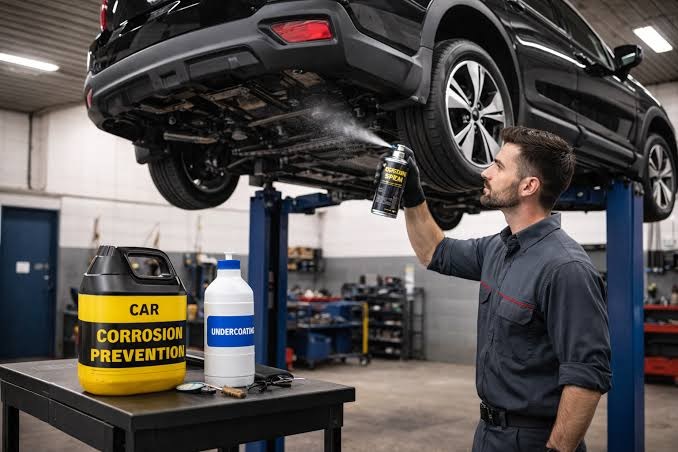
The modern gold standard for extending component life is the use of non-drying, oil-based or lanolin-based rust inhibitors. These viscous fluids are sprayed under high pressure into the inner cavities of the frame, inside the doors, and across the entire exposed undercarriage.
Unlike hard rubber, fluid-based inhibitors remain active and self-healing. Because they never fully dry, they maintain an incredible creeping ability through capillary action. The oil migrates upward, fighting gravity to penetrate deep into pinch welds and folded steel seams where moisture naturally collects. If a rock strikes a component protected by a lanolin spray, the fluid simply flows back over the exposed area, instantly resealing the wound.
Furthermore, these products act as exceptional moisture displacers. If applied to a vehicle that already has surface rust, the oil will soak through the porous iron oxide, push the trapped water out, and seal the metal off from the oxygen supply, completely halting the chemical reaction. While fluid-based coatings must be reapplied annually prior to the winter season, their ability to keep brake lines pristine, subframes solid, and suspension bolts easily removable makes them the most effective preventative maintenance tool available.

The Long-Term Return on Investment

Implementing a rigorous corrosion protection strategy drastically changes the financial trajectory of vehicle ownership. The cost of replacing a heavily rusted suspension crossmember, routing entirely new hard brake lines, and cutting out rotted rocker panels easily exceeds the current market value of an older vehicle, forcing it prematurely into a salvage yard.
By aggressively protecting the undercarriage, you preserve the tensile strength of the vehicle’s structural components and ensure that routine mechanical repairs remain straightforward. A mechanic can quickly unbolt a shock absorber on a well-oiled chassis, whereas a rusted, seized bolt requires hours of labor involving oxy-acetylene torches and heavy extraction tools. Ultimately, corrosion protection is not just about saving the metal; it is about preserving the safety, reliability, and financial equity of the machine for decades to come.
read more
Auto Dealer

Understanding the Role of Trade-In Programs in Modern Auto Dealerships

The traditional perception of a car dealership is heavily skewed toward the act of selling. Walk onto any lot, and the visual focus is entirely on the gleaming rows of fresh inventory waiting for a buyer. However, the true economic engine of a modern automotive franchise is far more complex than simple retail sales. For a dealership to thrive, it must operate as a highly efficient, two-way logistical hub. It must buy vehicles just as aggressively as it sells them.
At the center of this operational model sits the trade-in program. Far from being a mere customer convenience, the vehicle trade-in process is the lifeblood of dealership profitability, inventory acquisition, and transaction velocity. Understanding how these programs function behind the scenes provides valuable insight into automotive economics and equips consumers to navigate their next vehicle purchase with far greater financial clarity.

The Strategic Acquisition of Used Inventory

The most profitable department in a standard auto dealership is rarely the new car showroom. New vehicles operate on remarkably thin margins, heavily dictated by the manufacturer’s pricing structures and intense local market competition. The true profit center is the used car department.
To maintain a lucrative pre-owned operation, a dealership requires a constant, high-quality stream of inventory. Dealerships generally have two primary avenues for acquiring used cars: purchasing them at wholesale dealer auctions or acquiring them directly from consumers via trade-ins.
Buying inventory at a wholesale auction introduces significant overhead. The dealership must pay auction fees, arrange expensive freight transportation, and take a calculated risk on a vehicle’s mechanical history without the benefit of a thorough pre-purchase inspection. Conversely, a vehicle traded in by a local customer drives right up to the front door. There are no transportation costs, no auction buyer fees, and the dealership’s service department can inspect the vehicle on the spot. From a purely operational standpoint, trade-in programs are the most cost-effective and reliable method for a dealership to stock its used car lot.

Eliminating Consumer Friction in the Purchasing Journey

The modern consumer demands transactional efficiency. Buying a vehicle is inherently stressful, involving complex financing, insurance adjustments, and significant capital. If a buyer must first sell their current vehicle on the private market before purchasing a new one, the friction of the transaction increases exponentially.
Selling a car privately is a massive logistical headache. It requires the owner to pay for advertising, field calls from strangers, arrange test drives, navigate aggressive negotiations, and manage the highly risky transfer of thousands of dollars in cash or certified funds. Furthermore, the seller must navigate Department of Motor Vehicles paperwork to ensure liability is properly transferred.
Trade-in programs exist to entirely eliminate this friction. By consolidating the disposition of the old asset and the acquisition of the new asset into a single, streamlined transaction, the dealership accelerates the sales cycle. The buyer hands over their keys, signs a power of attorney allowing the dealer to handle the title transfer, and drives away in their new vehicle. This seamless transition is a calculated business strategy designed to prevent a customer from abandoning a purchase due to logistical fatigue.

The Financial Mechanics of the Trade-In Transaction

The financial implications of trading in a vehicle extend far beyond the actual cash value offered by the appraiser. When leveraged correctly, the trade-in acts as a powerful financial tool that can alter the entire structure of an automotive loan.

The Sales Tax Shield

One of the least understood and most financially impactful benefits of utilizing a trade-in program is the sales tax advantage. In the majority of US states, when you trade in a vehicle toward the purchase of another, you are only required to pay sales tax on the difference in price, rather than the full purchase price of the new vehicle.
For example, if you are purchasing a new truck for fifty thousand dollars and the dealership offers you twenty thousand dollars for your trade-in, your taxable liability is reduced to thirty thousand dollars. Depending on local tax rates, this tax shield can instantly save a buyer thousands of dollars in cash out-of-pocket, significantly narrowing the perceived gap between a dealer’s wholesale trade-in offer and a higher private-party retail price.

Managing Vehicle Equity

The trade-in also serves as a critical mechanism for managing automotive equity. If a buyer owns their vehicle outright, the trade-in value functions as an immediate cash down payment, lowering the principle of the new loan and reducing monthly payments.
However, many buyers attempt to trade in a vehicle while they still owe money to a bank. If the vehicle is worth less than the remaining loan balance, the buyer has negative equity, commonly referred to as being “upside down.” Modern dealership finance departments are highly adept at rolling this negative equity into the new vehicle loan. While this practice increases the overall debt burden on the consumer, it provides an immediate escape route for buyers who absolutely must transition to a different vehicle due to changing life circumstances, such as needing a larger vehicle for a growing family.

How Dealerships Evaluate and Appraise Vehicles

A common point of contention during a vehicle purchase is the disparity between what a consumer believes their car is worth and what the dealership actually offers. This gap is not necessarily born from dealer greed, but from the strict financial realities of automotive reconditioning and wholesale market data.
When a used car manager evaluates a trade-in, they are not looking at the retail asking prices on consumer automotive websites. They are looking at real-time, regional wholesale data. They evaluate what similar vehicles are actively selling for at dealer-only auctions that week.
More importantly, the appraiser must calculate the reconditioning buffer. Before a traded vehicle can be sold to a new retail customer, it must undergo a comprehensive mechanical and cosmetic reconditioning process. A vehicle might need a new set of tires, fresh brake pads, a fluid flush, paintless dent repair, and a professional interior detail. If the wholesale market dictates that a car is worth ten thousand dollars, and the dealer calculates that it requires fifteen hundred dollars in reconditioning to make it front-line ready, the trade-in offer will reflect that necessary deduction.

The Lifecycle of a Traded Vehicle

Once the paperwork is signed and the consumer drives away, the traded vehicle immediately enters the dealership’s triage system. Not every trade-in is destined for the dealership’s own used car lot. The dealer must rapidly determine the most profitable exit strategy for the asset.
If the vehicle fits the dealership’s brand profile, is in excellent mechanical condition, and has a clean title history, it is sent to the service department for reconditioning and placed on the retail lot. These vehicles represent the highest profit potential.
However, if the vehicle is excessively old, carries astronomically high mileage, requires repairs that exceed its market value, or falls outside the dealership’s target demographic, it is immediately designated for wholesale. These vehicles are loaded onto transport trucks and sent straight to regional auto auctions. The dealership’s goal is to liquidate these unwanted assets as quickly as possible, freeing up working capital to purchase better inventory.

The Digital Evolution of the Trade-In Process

Historically, the trade-in appraisal was a secretive process that took place behind closed doors, leaving the consumer entirely in the dark. Today, the integration of advanced digital retailing tools has forced the industry into an era of unprecedented transparency.
Consumers can now utilize automated valuation models integrated directly into a dealership’s website. By inputting their vehicle identification number, exact mileage, and condition, buyers receive instant, data-backed estimates before they ever set foot on the showroom floor. Some modern automotive retail platforms even offer sight-unseen cash guarantees, assuming the consumer’s description of the vehicle is accurate upon final inspection. This digital evolution has shifted the power dynamic, allowing consumers to cross-shop their trade-in equity across multiple dealerships with just a few clicks, forcing dealers to offer highly competitive, market-accurate numbers right out of the gate.
Trade-in programs are a brilliant example of a symbiotic business mechanic. They provide consumers with a safe, legally compliant, and tax-advantaged method of disposing of a depreciating asset while simultaneously fueling the dealership’s most profitable revenue stream. By understanding the data, the reconditioning costs, and the tax implications that drive these programs, consumers can approach the negotiation table with confidence and secure the maximum possible value for their automotive equity.
read more
1 2 3 … 8
Page 1 of 8