
The freedom to travel independently is a fundamental pillar of modern life, deeply tied to personal autonomy, career opportunities, and social connection. For decades, the automotive industry engineered vehicles around a remarkably narrow definition of the average driver. If you fell outside of that specific physical or cognitive baseline, securing reliable personal transportation meant relying on expensive, third-party aftermarket modifications that often compromised the safety and aesthetic integrity of the vehicle.
Today, a profound paradigm shift is reshaping automotive engineering. Driven by shifting demographics, advocacy from disability rights groups, and rapid advancements in software and robotics, major vehicle manufacturers are moving away from reactive modifications. Instead, they are embracing universal design, integrating accessibility directly into the factory blueprint. From physical entry hardware to sensory-friendly cabins and autonomous driving systems, automakers are finally recognizing that a truly premium vehicle is one that accommodates the diverse needs of all its passengers.
Revolutionizing Physical Entry and Egress
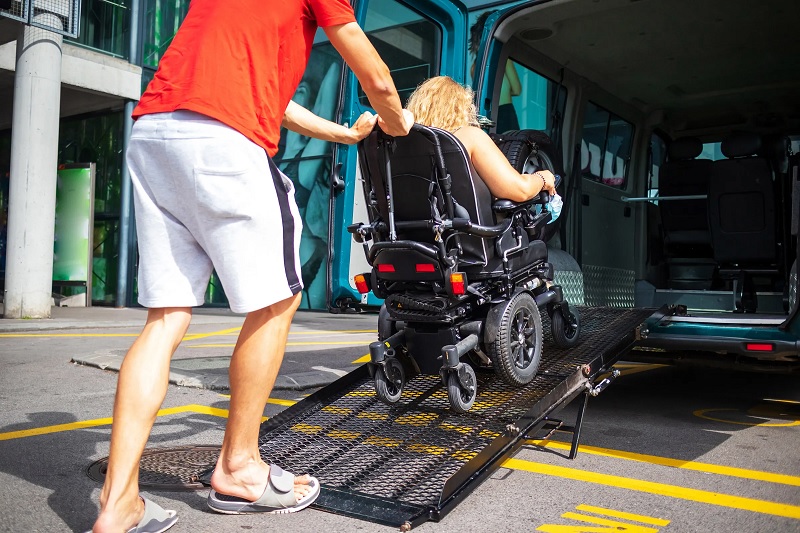
The most immediate barrier to automotive independence for individuals with limited mobility is the simple act of getting into and out of the cabin. Historically, wheelchair users were forced to purchase standard vans and send them to specialized fabrication shops to have the floors cut and dropped, a process that took months and cost tens of thousands of dollars.
Modern manufacturers have started forming strategic partnerships with mobility companies to streamline this process, and in some cases, are engineering vehicles with accessibility in mind from day one. Adaptive air suspension systems are becoming a crucial feature for accessible transport. Originally designed for luxury ride comfort and off-road clearance, engineers have repurposed air suspension to include a kneeling function. With the press of a button, the vehicle exhausts air from its suspension bladders, drastically lowering the ride height. This minimizes the angle of deployment for wheelchair ramps and reduces the step-in height for elderly passengers or those with joint pain, making the transition from a curb to a car seat seamless.
Furthermore, automakers are rethinking door and seating geometry. Vehicles are increasingly being designed with wider door apertures and pillarless entries, where the traditional central B-pillar is eliminated to create a massive, unobstructed opening. Inside the cabin, power swivel seating is moving from a niche medical add-on to a factory-optioned convenience. These seats automatically rotate outward toward the open door and gently lower toward the pavement, allowing passengers to transfer from a wheelchair or walker directly into the seat before being lifted smoothly back into the cabin.
Reimagining the Driver’s Seat and Primary Controls
Getting behind the wheel presents an entirely different set of challenges for drivers with limb loss, neuropathy, or paraplegia. The traditional configuration of a steering wheel, gas pedal, and brake pedal requires constant, coordinated use of all four extremities.
The Shift to Drive-by-Wire Technology
In the past, adaptive driving controls relied on heavy, mechanical metal rods bolted to the pedals and steering column. These setups required significant upper body strength to operate safely and often interfered with airbag deployment zones. Today, the automotive industry is rapidly transitioning to drive-by-wire systems. In a drive-by-wire vehicle, there is no physical mechanical connection between the steering wheel, the pedals, and the engine or brakes. Instead, driver inputs are converted into electronic signals that command the vehicle’s mechanical components.
This technology is an absolute game-changer for accessibility. Because the inputs are entirely electronic, the physical force required to accelerate, brake, or steer can be scaled down to near zero. Drivers with limited muscle strength can operate a two-ton vehicle using a highly sensitive, customizable joystick mounted to the center console. The resistance and feedback of these digital controls can be programmed to match the exact physical capabilities of the individual driver, providing a safe and effortless driving experience.
Voice Command and Secondary Systems
Operating secondary controls like windshield wipers, turn signals, headlights, and climate control can be exceptionally difficult for drivers using hand controls, as they cannot safely remove their hands from the steering apparatus. Automakers are solving this through the heavy integration of advanced, natural-language voice assistants. Rather than fumbling for a plastic stalk behind the steering wheel, a driver can simply instruct the vehicle to turn on the high beams, increase the cabin temperature, or activate the hazard lights. By removing the need for fine motor skills, manufacturers are allowing drivers to maintain total focus on the road.
Interface and Infotainment Accessibility
The automotive industry’s obsession with massive, glossy touchscreens created a sudden and severe accessibility crisis. While sleek and futuristic, smooth glass panels offer absolutely zero tactile feedback. For visually impaired passengers, elderly users with reduced vision, or individuals with hand tremors, navigating a flat touchscreen to adjust the radio or air conditioning while the vehicle is in motion is nearly impossible.
Recognizing this misstep, automotive interior designers are implementing a hybrid approach to cabin interfaces. There is a concerted movement back toward keeping critical functions tied to physical, heavily textured dials and switches that can be operated purely by touch and muscle memory.
For the digital displays that remain, software-level accessibility is being radically improved. Modern infotainment systems now feature screen-reading technology similar to what is found on smartphones, providing audio feedback as the user navigates through menus. High-contrast display modes, scalable typography, and colorblind-friendly interface palettes are becoming standard options hidden just beneath the surface of the main settings menu. Furthermore, deep integration with smartphone mirroring ensures that the specific accessibility settings a user relies on every day instantly translate to the dashboard screen the moment they enter the vehicle.
Designing for Sensory and Cognitive Diversity
Accessibility extends far beyond physical mobility. A significant portion of the population lives with neurodivergent conditions, such as autism spectrum disorder or severe sensory processing disorders. For these passengers, the interior of a vehicle can be a chaotic, overwhelming environment filled with harsh vibrations, flashing lights, and piercing acoustic alarms.
Manufacturers are now employing neuro-inclusive design principles to create calmer, more predictable cabin environments. Acoustic engineering has taken center stage. Automakers are utilizing active noise cancellation technology—which works exactly like high-end headphones by emitting sound waves that neutralize road noise—paired with acoustic laminated glass to create an isolation chamber that protects passengers from the sensory overload of highway traffic.
Interior lighting is also being engineered with cognitive comfort in mind. Harsh, strobe-like alerts are being replaced by soft, tunable ambient lighting that can be adjusted to specific hues known to reduce anxiety and promote calmness. Even the vehicle’s warning systems are being rethought. Instead of a jarring, high-pitched beep to warn of a lane departure or an approaching object, vehicles are utilizing localized haptic feedback, vibrating the specific side of the driver’s seat to silently and gently indicate danger without inducing panic.
The Autonomous Horizon and Advanced Driver Assistance
The most transformative accessibility developments are happening within the realm of Advanced Driver Assistance Systems (ADAS). Features initially designed to reduce highway fatigue are proving to be powerful tools for drivers with slower reaction times, limited neck mobility, or reduced peripheral vision.
Automated parking systems allow a driver who cannot physically twist around in their seat to perfectly parallel park with the press of a single button. Blind-spot monitoring systems act as a reliable second set of eyes, while automatic emergency braking provides a critical safety net for drivers who may suffer from joint stiffness that delays their ability to stomp on the brake pedal.
Ultimately, the natural progression of these systems leads to fully autonomous, Level 5 self-driving vehicles. While still in the developmental and regulatory stages, autonomous robotaxis and purpose-built shuttles represent the holy grail of automotive accessibility. A vehicle with no steering wheel or pedals removes the concept of the driver entirely. When cars can reliably navigate themselves, individuals who are legally blind, paralyzed, or living with severe cognitive impairments will finally have access to on-demand, private, unassisted transportation.
The automotive industry is in the midst of a profound ethical and technological awakening. By shifting the focus from the mythical average driver to the diverse realities of the human condition, manufacturers are doing more than just selling cars. They are engineering equity, tearing down the physical and digital barriers that have historically kept millions of people on the sidelines, and paving the way toward a future where the open road belongs to everyone.


