close

Auto Parts

Auto Parts

How Corrosion Protection Extends the Working Life of Vehicle Components

Most vehicles are not forced off the road by catastrophic engine failure or disintegrated transmissions. Instead, they are slowly consumed from the bottom up by a relentless, silent chemical reaction. Corrosion is the natural enemy of automotive longevity, fundamentally degrading the structural integrity, safety mechanisms, and reliability of a vehicle over time. While mechanical wear is predictable and often manageable through routine maintenance, rust operates invisibly inside frame rails, beneath plastic underbody shields, and across critical fluid lines.
Understanding how corrosion attacks a vehicle and implementing robust protection strategies is the single most effective way to extend the working life of an automobile, particularly for those operating in harsh climates. A well-protected chassis does not just preserve the aesthetic value of a car; it ensures that the mechanical components attached to it can safely perform their jobs for hundreds of thousands of miles.

The Chemistry of Automotive Corrosion

To effectively combat rust, one must understand how it forms in an automotive environment. Corrosion is an electrochemical process that occurs when iron alloys, such as the steel used in a vehicle’s chassis, are exposed to oxygen and moisture. This reaction creates iron oxide, commonly known as rust. Unlike aluminum oxidation, which forms a hard protective surface layer, iron oxide is porous and flaky. As rust forms, it expands and flakes away, continuously exposing fresh, virgin steel to the elements until the metal is entirely consumed.
This process is dramatically accelerated by the presence of electrolytes. In the automotive world, the most common electrolyte is road salt. When winter precipitation mixes with sodium chloride or modern liquid de-icing brines like magnesium chloride, it creates a highly conductive slurry. This moisture is kicked up by the tires and forced under high pressure into every crevice, pinch weld, and drainage hole in the vehicle’s undercarriage. Magnesium chloride is particularly devastating because it is highly hygroscopic, meaning it actively draws moisture out of the ambient air. A vehicle coated in this brine will continue to rust even when parked inside a dry, heated garage.

Vulnerable Components and the Consequences of Neglect

Automotive corrosion does not attack evenly. It targets specific high-stress and exposed areas of the vehicle, often with severe safety and financial implications.

The Subframe and Unibody Chassis

Modern vehicles utilize a unibody construction, meaning the frame and the body of the car are integrated into a single structural unit. The rigidity of this structure relies on precisely stamped steel panels welded together. When rust compromises the pinch welds or eats through the primary frame rails, the vehicle loses its structural stiffness. In a severe collision, a heavily corroded unibody will fold and collapse rather than transferring the impact energy around the passenger cabin as engineered.
Furthermore, the subframe—the heavy steel cradle that holds the engine, transmission, and steering rack—is highly susceptible to rust scaling. As the steel thins out from corrosion, the mounting points for the suspension control arms become dangerously weak. A sudden pothole impact on a rusted subframe can cause a lower control arm to completely detach, resulting in an immediate and catastrophic loss of steering control.

Hydraulic Brake and Fuel Lines

Tucked tightly against the floorpans are the vehicle’s hydraulic brake lines and pressurized fuel lines. These components are constructed from thin-walled steel tubing. Because they are located in the direct firing line of road debris and salt spray, they frequently suffer from deep pitting.
Brake lines operate under immense hydraulic pressure during panic stops. A microscopic rust pit that has eaten halfway through the wall of a brake line is a ticking time bomb. When the driver presses the brake pedal hard, the line ruptures, dumping hydraulic fluid onto the road and instantly neutralizing the vehicle’s braking capability. Similarly, a rusted fuel line will begin to weep highly pressurized, atomized gasoline onto hot exhaust components, presenting a massive fire hazard.

Electrical Grounds and Sensor Networks

Modern automobiles are rolling computer networks, relying on dozens of sensors communicating via precise voltage signals. The entire metal chassis of the car serves as the negative ground path for this electrical system. When corrosion sets in between a grounding strap and the steel chassis, the rust acts as a physical insulator. This creates heavy electrical resistance, resulting in voltage drops that cause sensors to read incorrectly, alternators to overwork themselves, and engine control modules to throw erratic diagnostic trouble codes. Protecting these grounding points from oxidation prevents weeks of frustrating and expensive electrical troubleshooting.

Factory Defenses vs. Real-World Driving Conditions

Automakers are fully aware of the corrosion problem and build vehicles with a strong baseline of defense. The majority of steel used in modern car manufacturing is galvanized, meaning it is dipped in molten zinc. Zinc is a highly reactive metal that acts as a sacrificial anode; it will oxidize and corrode before the underlying steel does. Additionally, the bare metal chassis is submerged in an electrophoretic e-coat bath that electrically bonds primer to every surface before the final paint and clear coat are applied.
However, factory protection has strict limitations. A vehicle traveling at highway speeds is constantly bombarded by sand, gravel, and road debris. This acts like a continuous sandblaster against the undercarriage, chipping away the factory e-coat and zinc plating. Once a rock chips the paint down to bare metal, salt and moisture enter the wound. The rust then begins to creep laterally underneath the healthy paint, bubbling and blistering the coating from the inside out. Factory protection is generally designed to survive a ten-year lifespan; for owners looking to keep their vehicles for fifteen or twenty years, aftermarket intervention is mandatory.

The Role of Aftermarket Corrosion Protection

Extending the working life of vehicle components requires applying secondary defensive layers that can withstand the physical abuse of the road. Not all rust protection methods are created equal, and choosing the wrong type can actually accelerate the destruction of the vehicle.

Hard Rubberized Undercoatings

Historically, automotive dealerships sold hard, rubberized or asphalt-based undercoatings as the ultimate rust protection. When sprayed onto a brand-new, perfectly clean chassis, these thick coatings create an impenetrable physical barrier against rocks and salt.
However, they share a fatal flaw: they dry hard and eventually crack. As the vehicle chassis naturally flexes over bumps, microscopic fissures form in the hard rubber coating. Salty water finds its way into these cracks and becomes trapped against the steel. Because the rubber coating prevents the metal from ever drying out, the chassis rots at an accelerated pace, entirely hidden behind a wall of black rubber that looks perfectly intact to the naked eye.

Fluid-Based Rust Inhibitors

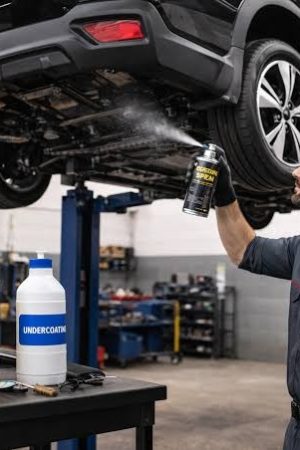
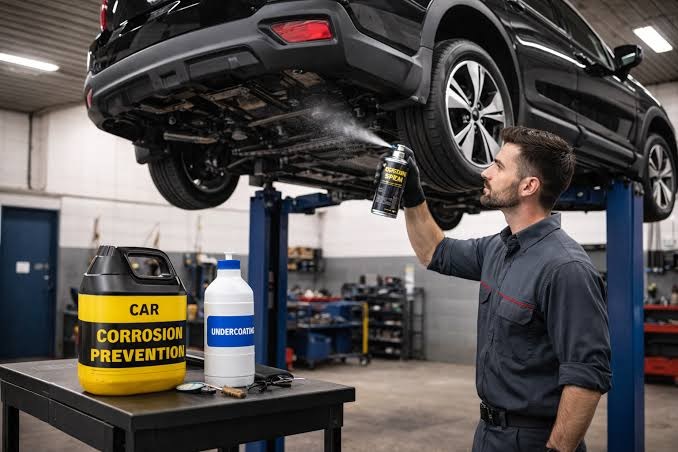
The modern gold standard for extending component life is the use of non-drying, oil-based or lanolin-based rust inhibitors. These viscous fluids are sprayed under high pressure into the inner cavities of the frame, inside the doors, and across the entire exposed undercarriage.
Unlike hard rubber, fluid-based inhibitors remain active and self-healing. Because they never fully dry, they maintain an incredible creeping ability through capillary action. The oil migrates upward, fighting gravity to penetrate deep into pinch welds and folded steel seams where moisture naturally collects. If a rock strikes a component protected by a lanolin spray, the fluid simply flows back over the exposed area, instantly resealing the wound.
Furthermore, these products act as exceptional moisture displacers. If applied to a vehicle that already has surface rust, the oil will soak through the porous iron oxide, push the trapped water out, and seal the metal off from the oxygen supply, completely halting the chemical reaction. While fluid-based coatings must be reapplied annually prior to the winter season, their ability to keep brake lines pristine, subframes solid, and suspension bolts easily removable makes them the most effective preventative maintenance tool available.

The Long-Term Return on Investment

Implementing a rigorous corrosion protection strategy drastically changes the financial trajectory of vehicle ownership. The cost of replacing a heavily rusted suspension crossmember, routing entirely new hard brake lines, and cutting out rotted rocker panels easily exceeds the current market value of an older vehicle, forcing it prematurely into a salvage yard.
By aggressively protecting the undercarriage, you preserve the tensile strength of the vehicle’s structural components and ensure that routine mechanical repairs remain straightforward. A mechanic can quickly unbolt a shock absorber on a well-oiled chassis, whereas a rusted, seized bolt requires hours of labor involving oxy-acetylene torches and heavy extraction tools. Ultimately, corrosion protection is not just about saving the metal; it is about preserving the safety, reliability, and financial equity of the machine for decades to come.
read more
Auto Parts

Choosing the Best Replacement Components for Vehicles Used on Rough Roads

Most factory vehicles are engineered for the theoretical ideal of perfectly smooth asphalt. But for drivers navigating rutted dirt trails, aggressively potholed urban streets, or miles of washboard gravel, the reality of the daily commute is brutal on a vehicle’s mechanical foundation. Standard Original Equipment Manufacturer (OEM) parts are built to a price point and tuned for a quiet, compliant ride under normal highway conditions. When subjected to the violent, high-frequency impacts of uneven terrain, these standard components degrade rapidly.
Equipping your vehicle for harsh environments requires moving beyond basic replacement parts and investing in heavy-duty upgrades designed to withstand continuous abuse. The goal is not just to repair the vehicle when it breaks, but to fortify it against future failures. By strategically choosing aftermarket components engineered for extreme durability, you can drastically reduce long-term maintenance costs and improve vehicle control on the worst surfaces.

Upgrading the Suspension System for Maximum Durability

The suspension system is the frontline defense against road damage. It absorbs the kinetic energy of every impact, preventing those forces from tearing the chassis apart. When standard suspension components fail, the resulting shockwaves destroy wheel bearings, loosen interior panels, and compromise your ability to steer and brake safely.

Selecting the Right Shock Absorbers and Struts

Standard twin-tube shock absorbers are highly prone to a phenomenon known as shock fade. When driven aggressively over corrugated gravel or heavily potholed roads, the hydraulic fluid inside a factory twin-tube shock rapidly heats up and aerates, churning into a useless, bubbly foam that provides zero dampening force. When this happens, the vehicle will bounce uncontrollably.
To combat this, upgrade to a monotube shock absorber. Monotube designs feature a much larger fluid capacity and physically separate the hydraulic oil from the nitrogen gas chamber using a floating piston. This intelligent design completely eliminates oil aeration, ensuring consistent dampening performance regardless of how violent the road surface becomes. For extreme, high-speed rough road driving, consider shocks with external remote reservoirs. These reservoirs drastically increase the overall fluid capacity and cooling efficiency, allowing the shock to absorb brutal impacts for hours without overheating.

Polyurethane vs. Rubber Bushings

Bushings are the flexible cushions that isolate suspension components from the vehicle’s metal frame. Factory rubber bushings are soft and prioritize a quiet cabin, but they tear, deform, and dry-rot quickly under heavy suspension articulation and constant impacts.
Replacing worn factory rubber with polyurethane bushings is a massive upgrade for rough road durability. Polyurethane is virtually impervious to road salt, engine oil, and extreme temperature fluctuations. While it transfers slightly more road vibration into the passenger cabin, polyurethane keeps the suspension geometry perfectly aligned under heavy dynamic loads. This prevents premature tire wear, eliminates sloppy steering response, and ensures the vehicle tracks straight when braking hard on a bumpy surface.

Fortifying Steering Linkages and Ball Joints

Rough roads transmit immense lateral forces directly into the steering rack. Every time a front tire strikes a deep rut, the tie rod ends and ball joints absorb the brunt of that impact. Factory steering linkages often utilize thin stamped metal and feature sealed ball joints filled with a lifetime grease that eventually washes out or dries up, leading to metal-on-metal grinding.
When replacing ball joints, pitman arms, and tie rod ends, look for heavy-duty aftermarket options constructed from forged steel. More importantly, prioritize greasable steering components. A greasable ball joint features a Zerk fitting, allowing you to pump fresh chassis grease into the joint during routine maintenance. This simple action forces out water, abrasive dirt, and old contaminated grease, exponentially extending the lifespan of the component in dusty or muddy environments. Additionally, adding a heavy-duty steering stabilizer acts like a horizontal shock absorber for your steering linkage, mitigating the harsh side-to-side jerking of the steering wheel when the tires hunt for traction on uneven terrain.

Choosing Tires Engineered for Punishment

Upgrading your mechanical components is useless if your tires cannot survive the journey. Highway terrain tires feature soft, flexible sidewalls and tight tread blocks designed exclusively for fuel efficiency and low road noise. On jagged gravel or pothole-ridden streets, these highway tires are highly susceptible to sidewall blowouts, pinch flats, and severe tread chunking.
If you frequently drive on rough roads, transition immediately to an All-Terrain (A/T) tire. High-quality all-terrain tires feature reinforced sidewalls with a higher ply rating, making them significantly more resistant to punctures from sharp rocks and structural failures from deep potholes.
Look for A/T tires with integrated stone ejectors. These are small raised ridges molded between the tread blocks that physically push gravel out of the grooves as the tire rotates. This clever feature prevents sharp stones from drilling down into the tire carcass and causing a slow, undetectable leak. Furthermore, the specialized rubber compounds used in premium A/T tires are chemically formulated to resist chipping and tearing, ensuring the tire maintains its structural integrity even after thousands of miles of grinding on abrasive surfaces.

Enhancing the Braking System for Debris and Heat

Braking performance degrades heavily in dirty, rough environments. Standard blank brake rotors easily trap mud, gravel dust, and standing water between the brake pad and the smooth metal rotor surface. This abrasive mixture deeply scores the rotors and causes the brake pads to glaze over with intense heat, drastically reducing your stopping power when you need it most.
For vehicles operating primarily on unpaved or heavily degraded roads, slotted brake rotors are an excellent replacement choice. The machined slots milled into the surface of the rotor act exactly like wiper blades, constantly clearing water, dust, and hot friction gases away from the contact surface. This ensures that the brake pad always bites into clean metal.
Pair these upgraded rotors with high-quality semi-metallic brake pads. While ceramic pads are popular on luxury cars for producing less visible brake dust, semi-metallic pads perform significantly better in a wide range of temperatures. They are also much more physically resilient against the abrasive grit kicked up by dirt roads, providing a firmer brake pedal feel and superior longevity in harsh environments.

Protecting the Undercarriage and Drivetrain

When a vehicle bottoms out on a jagged rock or drops violently over the sharp edge of a frost heave, the fragile oil pan and transmission are completely exposed to the impact. Replacing torn factory plastic splash guards with heavy-duty metal underbody protection is a vital preventative measure that can save you from catastrophic engine failure.
Invest in thick aluminum or steel skid plates. These plates bolt securely to the vehicle’s strongest frame points, creating a physical armor barrier that deflects direct impacts away from the aluminum oil pan, transmission housing, and lower radiator hoses.
Similarly, replacing standard stamped steel differential covers with heavy-duty nodular iron or reinforced cast aluminum covers is highly recommended. These upgraded covers prevent the delicate differential ring and pinion gears from being crushed if the rear axle drags over a large obstacle. As an added benefit, these aftermarket covers often feature internal baffles to direct oil flow and external cooling fins that help dissipate the high heat generated by the gears pushing the vehicle through difficult terrain.

Adapting Filtration and Fluid Management

Rough roads are inherently dirty roads. Vehicles trailing behind other traffic on dry, unpaved surfaces are constantly inhaling thick clouds of abrasive silica dust. Factory paper air filters clog rapidly in these conditions, effectively starving the engine of oxygen, triggering check engine lights, and severely reducing both horsepower and fuel economy.
Replace standard disposable paper filters with a high-capacity, reusable foam or cotton-gauze air filter. These specialized performance filters are often treated with a sticky, proprietary filtration oil that captures and holds microscopic dust particles long before they can bypass the filter and scar the engine’s internal cylinder walls.
Furthermore, the constant jarring and heavy workloads associated with rough-road driving generate excess heat within the engine, transmission, and axles. Upgrading all vital fluids to full synthetic formulations is a critical final step. Synthetic oils possess superior molecular stability. They will not break down, foam, or shear under extreme thermal stress, providing maximum lubrication to your newly upgraded internal components when they are working their hardest against the terrain.
Replacing broken parts with standard equivalents simply traps you in an endless cycle of failure and repair. A vehicle that spends its life battling severe road imperfections requires a fundamental shift in how it is maintained and equipped. By selectively upgrading to heavier-duty suspension components, reinforced steering linkages, durable all-terrain tires, and protective undercarriage armor, you transform the vehicle from a fragile commuter into a resilient, capable machine.
read more
Auto Parts

How Cooling System Auto Parts Prevent Engine Overheating Issues

Engine overheating is one of the most common causes of vehicle breakdowns and long-term engine damage. Modern vehicles rely on a network of cooling system auto parts designed to regulate engine temperature, manage heat, and ensure reliable performance in all driving conditions. When these components work together correctly, they protect the engine from excessive heat that can lead to warped parts, blown gaskets, or complete engine failure.

Understanding how these parts function helps vehicle owners recognize early warning signs and maintain their cars more effectively.

Why Engine Overheating Happens

An engine generates intense heat during combustion. If that heat is not dissipated efficiently, temperatures rise beyond safe limits. Overheating usually occurs due to:

  • Insufficient coolant flow

  • Blocked or damaged cooling components

  • Failed temperature regulation

  • Poor airflow through the radiator

Cooling system auto parts are engineered to address each of these risks and maintain optimal operating temperatures.

Core Cooling System Auto Parts and Their Roles

Radiator: The Primary Heat Exchanger

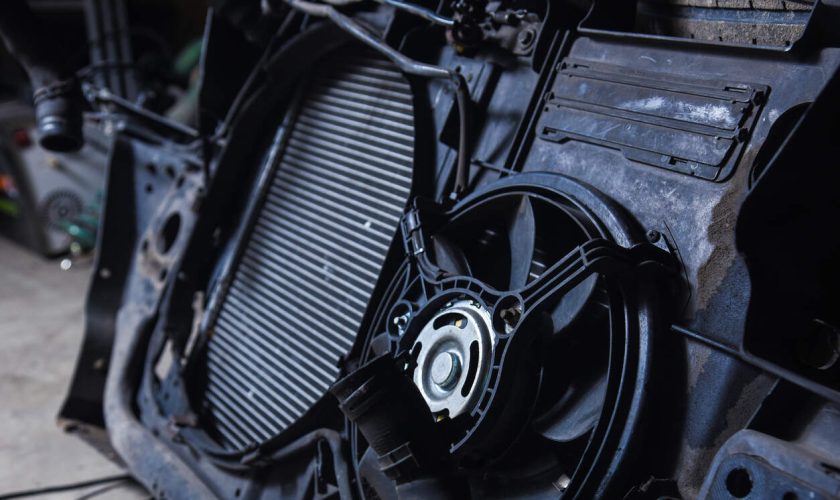
The radiator is responsible for releasing heat from the engine coolant into the surrounding air. Hot coolant flows through thin tubes, while air passing through the fins removes excess heat.

Key benefits include:

  • Prevents coolant from reaching boiling temperatures

  • Maintains consistent engine operating range

  • Supports fuel efficiency and emissions control

A clogged or leaking radiator significantly reduces heat dissipation, increasing the risk of overheating.

Water Pump: Circulating Coolant Continuously

The water pump acts as the heart of the cooling system. It circulates coolant between the engine, radiator, and heater core, ensuring even temperature distribution.

Without proper circulation:

  • Heat accumulates in the engine block

  • Coolant stagnates and loses effectiveness

  • Hot spots develop, stressing engine components

A failing water pump often causes sudden overheating, especially at higher speeds.

Thermostat: Regulating Temperature Flow

The thermostat controls when coolant flows to the radiator. It remains closed while the engine warms up and opens once optimal temperature is reached.

This regulation:

  • Prevents engine from running too cold or too hot

  • Improves fuel combustion efficiency

  • Reduces wear during cold starts

A stuck thermostat is a common but often overlooked cause of overheating.

Cooling Fan: Maintaining Airflow at Low Speeds

When a vehicle is stationary or moving slowly, natural airflow is limited. The cooling fan compensates by pulling air through the radiator.

Its role is crucial in:

  • Traffic and idle conditions

  • Hot climates

  • Towing or heavy-load driving

Fan motor or relay failure often leads to overheating in stop-and-go traffic.

Coolant and Hoses: Heat Transfer and Containment

Engine coolant absorbs heat and transfers it away from the engine. Hoses transport this coolant between system components.

Well-maintained coolant and hoses:

  • Prevent corrosion and scale buildup

  • Maintain proper pressure levels

  • Avoid leaks that reduce cooling efficiency

Old coolant or cracked hoses compromise the entire system’s performance.

How These Parts Work Together

Cooling system auto parts function as a closed-loop system:

  • Coolant absorbs heat from the engine

  • The water pump circulates heated coolant

  • The thermostat directs coolant flow

  • The radiator and fan dissipate heat

  • Cooled coolant returns to the engine

A failure in any single component can disrupt this balance and trigger overheating.

Signs Your Cooling System May Be Failing

Recognizing early symptoms helps prevent costly damage:

  • Rising temperature gauge

  • Steam from under the hood

  • Coolant leaks under the vehicle

  • Unusual engine noises

  • Sweet smell from leaking coolant

Prompt inspection of cooling system auto parts can stop minor issues from escalating.

Importance of Preventive Maintenance

Routine maintenance is the most effective way to avoid overheating problems. This includes:

  • Regular coolant flushes

  • Inspecting hoses and belts

  • Replacing worn thermostats

  • Checking radiator and fan operation

Proactive care extends engine life and improves overall reliability.

FAQ

What happens if I continue driving an overheating engine?

Continuing to drive can cause severe engine damage, including warped cylinder heads, blown head gaskets, and complete engine failure.

How often should engine coolant be replaced?

Most manufacturers recommend replacing coolant every 30,000 to 60,000 miles, depending on coolant type and driving conditions.

Can a bad radiator cap cause overheating?

Yes, a faulty radiator cap can prevent proper pressure buildup, allowing coolant to boil and reducing cooling efficiency.

Why does my car overheat only in traffic?

This usually indicates a failing cooling fan, fan relay, or restricted airflow through the radiator.

Is overheating more common in summer?

Higher ambient temperatures increase cooling demands, making existing weaknesses in the cooling system more noticeable.

Can low coolant levels trigger overheating quickly?

Yes, low coolant reduces heat absorption and circulation, causing rapid temperature spikes.

Are aftermarket cooling system parts reliable?

Quality aftermarket parts can be reliable if they meet manufacturer specifications and are installed correctly.

read more
Auto Parts

Inner Workings, Outer Transformation: The Constellation of Modern Auto Parts

Introduction

Beneath the elegance of every vehicle’s exterior exists an unseen marvel—a meticulously orchestrated system of auto parts. These components, in their silent operation, hold the keys to safety, durability, and performance. They deserve celebration not only for their utility but for the intricate engineering and innovation they embody. In this exploration, we uncover the sophisticated world of auto parts, offering clarity and appreciation for the architecture that enables every drive.

The Framework: Foundations of Strength and Direction

The Chassis – The Vehicle’s Backbone

  • The chassis provides the primary structure, bearing the stress of motion and supporting every other system.

  • Unibody and ladder frames offer distinct advantages—unibody construction is favored for rigidity and fuel efficiency, while ladder frames afford rugged durability for trucks and SUVs.

  • Integrated crumple zones and reinforcement beams distribute impact energy, providing a first—and often unseen—layer of safety.

Body Panels and Structure

  • Cars blend engineering artistry and protection through body panels: hoods, fenders, doors, and bumpers.

  • Materials range from traditional steel to lightweight aluminum and reinforced polymers, each chosen for unique balances of performance, protection, and charm.

  • Modern assembly nuances—tight panel gaps, hidden fasteners, and sculpted lines—speak to precision manufacturing and contribute to efficiency through fine-tuned aerodynamics.

The Pulse of Movement: Powertrain Excellence

Heart of the Machine – The Engine

  • Engines house an exquisite ballet of pistons, camshafts, timing chains, and valves to convert fuel (or electricity) into controlled motion.

  • Advances such as direct injection, turbocharging, and hybrid drive modules extract greater power from less fuel, embodying the relentless pursuit of efficiency without sacrifice.

  • Ancillary systems—radiators, oil pumps, and electronic control units—work quietly in concert, protecting and managing the engine’s vital signs.

Transmission and Drivetrain

  • Transmissions, automatic and manual alike, translate raw power into smooth acceleration and adaptable speed.

  • Gearboxes, differentials, and constant velocity (CV) joints distribute torque across axles, adapting to changing terrain or driving conditions without fuss.

  • All-wheel- and four-wheel-drive systems, managed by sophisticated transfer cases, provide security on uncertain roads.

The Guardians: Mastering Safety and Control

Braking Assemblies

  • Modern braking systems merge hydraulic precision with advanced electronics—disc and drum brakes are now coupled with anti-lock braking systems (ABS) and electronic brake-force distribution.

  • Brake pads, rotors, calipers, and master cylinders must harmonize to deliver progressive, reliable stops.

  • Automated emergency braking, now increasingly common, blends sensors and actuators to anticipate and mitigate risks before drivers can react.

Suspension and Steering

  • Shocks, struts, springs, and bushings insulate occupants from road harshness while maintaining tire contact and stability.

  • Suspension geometry—control arms, anti-roll bars, ball joints—curates the delicate interplay between comfort and cornering confidence.

  • Steering systems, from traditional hydraulic to electric power assist, convert subtle hand movements into effortless guidance.

The Silent Conveniences: Comfort, Climate, and Quietude

Interior Systems

  • HVAC (heating, ventilation, air conditioning) modules employ compressors, blowers, evaporators, and filters to ensure an ideal climate regardless of season.

  • Electric seat adjusters, lumbar supports, and multifunction steering wheels enhance bespoke comfort.

  • Central locking, power windows, and trunk releases rely on an elaborate array of small motors, relays, and microchips.

Sound, Light, and Visibility

  • Headlights have evolved from sealed beams to adaptive LEDs, offering crisp vision and lower energy consumption.

  • Sensors automate wipers, headlamp activation, and dimming, creating a serene, self-adjusting environment for drivers.

  • Acoustic materials inside doors, roof, and floor linings tame road and wind noises, elevating even the humblest ride.

The Digital Nerve: Electronics and Driver Assistance

Electronic Control Units and Sensor Arrays

  • Modern vehicles boast a multitude of interconnected control units governing everything from engine timing to seatbelt tension.

  • Sensors monitor speed, tire pressure, surroundings, and even passenger posture, offering real-time adjustments for both efficiency and safety.

  • Advanced driver-assistance systems (ADAS) integrate cameras, radar, and ultrasonics to provide features like blind-spot warnings, lane keeping, and adaptive cruise control.

Infotainment and Connectivity

  • Touchscreens, digital dashboards, and integrated navigation blend entertainment with vital vehicle data.

  • Voice recognition, smartphone projection, and wireless charging marry convenience with minimal distraction.

The Cycle of Renewal: Maintenance and Consumables

Regular Upkeep—The Unsung Heroes

  • Consumables such as oil, coolant, brake pads, filters, and wiper blades are the steady guardians of longevity.

  • Routine inspection and timely replacement prevent greater systemic failures, preserving performance and peace of mind.

  • Tires remain the only interface between vehicle and road; proper rotation, alignment, and inflation cannot be overstated.

Table: Core Auto Parts and Their Quiet Significance

Auto Part Principal Function Subtle Nuance
Chassis Structural support Sets the foundation for dynamics
Engine Power generation Optimized for efficiency, smoothness
Transmission Modulates and distributes power Seamless gear transitions
Suspension Comfort and stability Adapts to terrain and driving style
Brakes Stopping and control Integrated safety features
ECU & Sensors System coordination Anticipates needs and hazards
Interior Features Comfort and convenience Customizability and quiet operation
Tires Grip and command Influences handling, economy

Innovation and Customization: Personalization in Parts

  • The aftermarket world enables drivers to enhance performance, personalization, or comfort—upgraded air filters, suspensions, infotainment systems, and bespoke trim elements allow unique expression.

  • Eco-conscious consumers increasingly opt for remanufactured or recycled components, merging responsibility with economy.

Selecting with Intelligence

  • Genuine (OEM) parts provide assurance of fit and reliability, especially for critical systems.

  • Reputable suppliers and certified installers safeguard warranty and safety, particularly for safety, powertrain, and electronic upgrades.

  • For enthusiasts, professional advice balances innovation with integrity, ensuring upgrades enhance rather than compromise the vehicle.

Conclusion

Respecting auto parts means honoring the invisible craft, insight, and evolution embedded in every mile. Each drive is guided by an assembly forged from relentless experimentation, global expertise, and quiet genius. Informed stewardship—through mindful choice, attentive care, and a dash of personalization—ensures that every vehicle remains more than transport: it becomes an enduring testament to discipline, ingenuity, and tasteful pride on the open road.

read more
Auto Parts

The Subtle Genius Beneath the Hood: Rethinking Auto Parts in Modern Motoring

Introduction

The everyday marvel of automotive motion owes its existence to an intricate tapestry of parts, each quietly orchestrating power, control, and comfort. While glossy exteriors and digital dashboards draw the eye, the genuine soul of every vehicle lies within the hidden architecture of its auto parts. This article seeks to shed elegant light on the overlooked artistry, intelligence, and innovation that auto parts embody, inviting readers to regard each journey as the cumulative work of countless, harmoniously engineered components.

The Foundational Framework: Structure and Stability

The Chassis—Bedrock in Motion

  • The chassis is the ultimate anchor, supporting the body, absorbing shocks, and shaping both safety and performance.

  • Evolving from rugged ladder assemblies to sleek monocoque designs, this foundational framework is a testament to engineering’s adaptability—blending strength, weight savings, and crash resilience with quiet finesse.

  • Subtle enhancements—ranging from high-tensile alloys to computer-modeled crumple zones—protect not just occupants, but the integrity of all distal systems.

Body Panels: The Unseen Defenders

  • Beyond style and paint, door skins, fenders, and bonnets absorb impacts, ward off weather, and channel airflow.

  • Meticulous precision in assembly minimises vibrations and noise, indicating a deeper commitment to lasting quality.

Breathing Life: The Dynamic Powertrain

Engine: Complex Harmony in Motion

  • Modern engines are kaleidoscopes of innovation—where pistons, valves, and turbines shape combustion into controlled momentum.

  • Advances such as variable valve timing, turbochargers, and hybrid modules show how parts can elevate both efficiency and exhilaration.

  • The unsung elements—timing belts, head gaskets, oil pumps—perform in quiet tandem, ensuring dependable rhythm and endurance.

Transmission and Drive

  • Gearboxes, whether manual, automatic, or dual-clutch, convert energy into seamless acceleration across every driving scenario.

  • Differentials, axles, and constant velocity joints choreograph the exacting dance of torque between wheels, bestowing grace equally upon city corners and country switchbacks.

Guardians of Command: Safety and Control Components

Braking Systems: Assurance on Demand

  • Disc and drum brakes, complete with rotors, pads, hydraulics, and advanced anti-lock modules, promise confident stops in a whisper or a storm.

  • Brake boosters and electronic controls fine-tune every halt, blending reassurance with sophistication.

Suspension and Steering: Architects of Comfort

  • Shock absorbers, coil springs, and bushings dissolve road imperfections, granting serenity through every undulation.

  • Precise steering racks, tie-rods, and ball joints transform intent into motion, balancing playfulness with predictability on the open road.

Sanctuaries of Comfort: Interior Innovations

Climate Control and Ergonomics

  • Heating, ventilation, and air conditioning systems rely on compressors, expansion valves, and composite ductwork to sculpt perfect atmospheres in all seasons.

  • Motorized seats, lumbar supports, and memory modules exemplify how auto parts nimbly blend technology and tactile comfort.

Electronic Touches

  • Electric windows, precise locking mechanisms, and ambient lighting merge convenience with reliability—each enabled by a well-honed array of motors, relays, and discrete sensors.

  • Infotainment units, from touch-screens to haptic controllers, are supported by an intricate network of connectors and controllers.

The Digital Heart: Control Units and Sensors

Intelligence at Every Turn

  • Electronic control units (ECUs) govern everything from engine timing to advanced driver assistance, processing thousands of signals for performance, comfort, and safety.

  • A vast array of sensors—monitoring oxygen, velocity, humidity, and even cabin air quality—enable the car to “sense” and adapt with remarkable speed.

  • Safety leaps forward with radar, lidar, cameras, and ultrasonics, now woven into the fabric of automatic braking, parking assists, and intelligent navigation.

The Rhythm of Renewal: Consumables and Regular Care

  • Engine oil, air and cabin filters, spark plugs, and brake pads stand as cost-effective sentinels of longevity and smooth function.

  • Tire care, though simple, is foundational—correct compounds, rotations, and proper alignment keep journeys safe and serene.

  • Attention to wipers, bulbs, and fuses ensures clear vision and constant communication with other road users.

Customization and the Aftermarket Renaissance

Personalizing the Drive

  • Performance upgrades—sport exhausts, advanced suspensions, remapped ECUs—offer enthusiasts a way to fine-tune their machines to particular tastes without sacrificing reliability.

  • Interior and exterior enhancements, from new infotainment systems to bespoke trim, allow owners to infuse personality and modernity into even elder vehicles.

Embracing Sustainable Options

  • Remanufactured or recycled parts enable responsible stewardship without compromising on quality or safety.

  • Smart choices, such as low-resistance tires and eco-friendly fluids, reflect a shift toward greener motoring.

Selection and Assurance: Navigating Choices

  • Original equipment manufacturer (OEM) parts offer guaranteed fit, finish, and performance, underpinned by comprehensive support.

  • Reputable aftermarket suppliers provide compelling innovations and customization opportunities, often at favorable price points.

  • For critical systems, professional installation and skilled consultation trump expedience, reinforcing long-term confidence and pleasure.

Conclusion

To appreciate auto parts is to admire the silent genius and relentless refinement upon which motoring’s pleasures are built. Each unseen component, however small, is an invitation to gratitude—a subtle affirmation of trust, comfort, and performance. By choosing, maintaining, and perhaps even upgrading with discernment and care, today’s motorist steps into a lineage of craftsmanship and ingenuity. Every mile thereafter, smooth or spirited, stands as a testament to the invisible hands shaping excellence beneath the hood.

read more
Auto Parts

The Anatomy of Excellence: Unveiling the World of Auto Parts

Introduction

The essence of any motor vehicle is not defined merely by its silhouette or performance—but by the carefully crafted assembly of auto parts working in silent concert beneath the surface. Each journey, whether mundane or momentous, is shaped by an orchestra of components, engineered for durability, harmony, and responsiveness. To the discerning enthusiast and pragmatic driver alike, understanding auto parts is the key to unlocking a deeper appreciation of automotive reliability, safety, and subtle luxury.

The Backbone of Mobility: Fundamental Structures

The Chassis — Bedrock of Integrity

  • Acts as the primary frame supporting the vehicle’s weight and absorbing dynamic forces encountered on the road

  • Technologies range from classic ladder frames found in rugged trucks to lightweight monocoque (unibody) architectures in modern sedans and crossovers

  • Integrated crumple zones and reinforcements serve as guardians, channeling and absorbing collision energy to protect occupants

Body Panels and Architecture

  • Exterior panels—hoods, fenders, bumpers, and doors—not only shape a car’s visual identity but channel air for efficiency and protect inner workings from debris

  • Materials have evolved from heavy steel to sophisticated blends of aluminum, polymers, and high-strength composites, balancing safety, economy, and performance

The Pulse of Precision: Powertrain Components

Engines — The Heartbeat of Motion

  • Engines comprise an intricate ballet of pistons, crankshafts, valves, and timing systems, all coordinated to convert fuel or electricity into seamless forward motion

  • Modern advancements embrace turbochargers, hybrid modules, and variable valve timing to enhance efficiency without sacrificing vigor

Transmission and Drivetrain

  • Manual or automatic transmissions translate engine output into usable power, optimizing balance between acceleration, economy, and ride comfort

  • Differentials and axles distribute force to the wheels, with innovations such as all-wheel drive systems granting confidence across diverse terrains

  • Constant velocity (CV) joints provide flexibility for front-wheel drive, adapting to steering input without power loss

Guardians of Safety and Poise

Braking Systems

  • Disc and drum brakes, paired with hydraulic circuits and ABS technology, ensure composed deceleration in all conditions

  • Advanced systems now integrate electronic brake-force distribution and emergency braking aids, reducing the risks of skids and collisions

  • Brake pads, rotors, calipers, and master cylinders must harmonize flawlessly to deliver smooth, confident stops

Suspension and Steering

  • Shock absorbers, struts, springs, and control arms insulate occupants from road imperfections, optimizing both comfort and tire contact for responsive handling

  • Steering assemblies—rack-and-pinion, electric, or hydraulic—translate driver intent into precise directional change

  • Bushings and anti-roll bars curtail unwanted sway, delivering stability at speed and poise through corners

Crafting Comfort and Style: Interior Mechanisms

Climate and Seating

  • Heating, ventilation, and air conditioning (HVAC) systems employ compressors, fans, filters, and ducts to maintain cabin tempo and purity

  • Power seat adjusters, lumbar supports, and integrated heating/cooling reflect the march toward luxury once reserved for premium models

Electronic Conveniences

  • Central locking, power windows, and infotainment units blend utility with sophistication, relying on an intricate network of switches, sensors, and motors

  • Advanced driver assistance systems (ADAS), such as lane-keeping aids, blind-spot monitors, and adaptive cruise control, rely on a web of cameras, radar, and computing modules for increased safety

The Digital Core: Electronics and Intelligence

Control Units and Sensors

  • Electronic control units (ECUs) coordinate engine, transmission, safety, and entertainment systems in real-time, balancing efficiency, emissions, and performance

  • Sensors monitoring parameters like air-fuel mixture, wheel speed, and even cabin air quality inform the vehicle’s split-second decisions

Lighting and Visibility

  • LED and adaptive lighting systems, once premium luxuries, have become pillars of vision and safety on modern vehicles

  • Wipers, defoggers, and rain sensors work in unison to assure unwavering clarity in adverse conditions

Routine Sustenance: Consumables and Maintenance

  • Engine oil, air and fuel filters, and transmission fluids are the unsung defenders of longevity—regular replacement wards off wear and inefficiency

  • Brake pads, wipers, and bulbs are minor investments that pay immense dividends in safety and confidence

The Rise of the Aftermarket and Personalization

Upgrades and Enhancements

  • Performance-oriented parts—sport exhausts, high-flow air intakes, bespoke wheels, and tuning chips—empower owners to tailor their driving experience

  • Comfort upgrades, from ambient lighting kits to modern infotainment retrofits, breathe new life into classics and daily drivers alike

Sustainability and Remanufacturing

  • Remanufactured or recycled parts champion resource consciousness while offering substantial cost savings without sacrificing reliability

  • Eco-focused parts suppliers and green technologies continue to expand within the replacement and upgrade arena

Selecting with Wisdom: Strategies for Quality

  • Favor original equipment manufacturer (OEM) parts for critical systems to ensure ideal fit, safety standards, and warranty compatibility

  • Rely on reputable suppliers—prioritize warranties, detailed documentation, and customer support

  • Consult trusted professionals or verified technical resources for complex installations or performance modifications

Conclusion

Auto parts are the unsung architects of every journey, rendering performance, comfort, and safety with every rotation, spark, or signal. To appreciate them is to understand the silent discipline that elevates ordinary travel into a seamless, dependable, and even joyful experience. In a world of constant driving demands and evolving technology, the well-chosen and well-maintained auto part stands as an emblem of foresight, taste, and enduring mobility.

read more
Auto Parts

Vehicle Parts From Junkyards

Is it true that you are searching for car parts that won?t cost you a fortune? Is it accurate to say that you are the kind of auto devotee who loves to make vehicles utilizing modest yet extraordinary parts? You should take a stab at searching for car parts from junkyards. However, don?t be prevented by the term ‘junkyard. Most parts sold here can undoubtedly be fixed and reestablished.

Automobile parts from junkyards have been rescued from destroyed vehicles. These incorporate utilized body, electrical and motor parts. The majority of them are likewise accessible as automobile parts that you can promptly introduce to your vehicles. They are pre-cleaned, adapted, reviewed and tried to guarantee quality.

So if you?re searching for vehicle parts like motors, starters, alternators, guards, sound systems, guiding segments, dashboards, entryways, debilitates, haggles however don’t have any desire to go through heaps of cash, you can generally depend on car parts from junkyards. Most vendors of these automobile parts incorporate inventories of utilized parts for late models.

Step by step instructions to Get the Best Vehicle Parts from Junkyards

Most will differ that you can discover beneficial things in junkyards, yet this isn’t the situation. You can, indeed, discover dependable materials there. It’s simply a question of how far you would go to discover what you?re searching for. The most ideal way of getting the best arrangement is to lead broad exploration. Examine motoring magazines and on sites. Discover arrangements of solid junkyards and attempt to visit however many as could be allowed.

The main thing is to have the option to tell if a vehicle part is certified or not. At the point when you are adequately proficient, you can’t be offered items that are not implied for your particulars. In this manner, it would give you huge edge to have sufficient data in regards to automobile parts from junkyards.

Some obscure junkyards attempt and sell problematic items. For this situation, attempt and converse with individuals who have worked with them already. Auto specialists can likewise assist you with tracking down the best car parts from junkyards and offer you guidance regarding them.

read more
Auto Parts

Purchasing Car Parts On The Web

Buying vehicle parts online can be prudent, and you can even look over among a wide determination of utilized and reconditioned parts that are for all intents and purposes all around great to set aside considerably more cash. Regardless of whether you wanted to supplant bigger things like transmissions or differentials, or little subtleties, for example, taillights or hood adornments, you can discover practically any car parts you might require on the web.

With regards to purchasing a vehicle, there are truly just two techniques to browse. To start with, you can purchase or rent another vehicle and afterward exchange it each a few years for the most recent year model. Then again, you can buy a vehicle and drive it for 7 to 10 years to “get the best possible deal from it.”

Clearly, the most practical of these decisions for a great many people will be to save your vehicle for various years, rather than continually exchanging for the most recent model – and losing cash simultaneously. However, saving your vehicle for a lengthy time span implies that you should be cautious with regards to its upkeep, and every once in a while you will probably need to supplant a few sections and have other support and fixes performed.

However, with regards to supplanting car parts, any individual who has visited a repairman recently can let you know that expenses have soar. Vehicle parts, and particularly unique hardware maker, or OEM, automobile parts can be restrictively costly for some makes and models. When in doubt, the more intriguing or costly your vehicle is in any case, the more costly the new parts will be.

This is particularly obvious on the off chance that you buy car parts from the first producer. However, there are a few answers for the significant expense of supplanting car parts. For instance, you can decide to buy supposed outsider parts on the web. These are automobile parts made by different organizations, not the automaker; and they are ordinarily a lot more affordable than purchasing OEM parts.

Outsider parts are promptly accessible for almost any model of vehicle or truck, and frequently the value contrast will be considerable. For instance, substituting a radiator for a standard American-created vehicle can cost as much as $800 on the off chance that you buy unique hardware maker parts. In any case, when you purchase a substitution radiator for a similar vehicle from an outsider producer, it is feasible to pay just $250. Clearly, that is a tremendous reserve funds, and something you will need to consider the following time you wanted to substitute car parts for your vehicle.

Yet, there is one more choice also: utilized automobile parts are accessible to fit generally American and unfamiliar made vehicles. Utilized or “reconditioned” parts are frequently sold at a small portion of the cost of new, and much of the time they are similarly as dependable to utilize.

Despite the fact that you can discover utilized car parts at forte vendors, auto shops and parts stores, by a wide margin the best costs are to be found on the web. There are a few major name vehicle parts stores online that have some expertise in utilized or reconditioned parts. A large portion of these locales have a simple to utilize search work that will permit you to check whether they have the part you really wanted in one moment.

This will save you a tremendous measure of time over the “old way” of getting things done: driving all over town and inquiring as to whether the part is accessible at each unique area you hit. Thus, purchasing automobile parts online is substantially more helpful and can likewise save you a lot of cash.

read more
Auto Parts

Antique Vehicle Parts

Do you have an affection for gathering collectible and vintage vehicles? Is it accurate to say that you are currently reestablishing your antique vehicle’s previous excellence? Assuming you are, you’re having similar involvement in numerous other vehicle devotees everywhere. You may likewise be searching for antique vehicle parts to totally restore your child.

Antique vehicle parts are presumably among the most sought after items in the car market today. The prevalence of vintage vehicle rebuilding has driven numerous fans to search for great antique parts to take care of business. Fundamentally, antique automobile parts are those that came from vintage vehicles. Instances of antique automobile parts incorporate as metal entryway handles, wood-framed scramble trims, and extremely observant front trims and belts.

Where to Discover Antique Car Parts

Assuming you?re looking for solid and great antique automobile parts, the best places to begin looking are in auto shops and sellers that work in disseminating them. These are niche stores where you can discover a variety of antique parts from outside things like wheels, hoods, grilles, and inside parts like dashboard instruments, entryway handles, and motor parts.

Then again, assuming you’re simply too occupied to even consider going to these shops, going on the web would be better for you. The Web is home to great many web-based vehicle parts destinations where you can discover what you’re searching for with only a couple of snaps. The vast majority of these destinations offer different sorts, sorts and brands of antique automobile parts. You can peruse many items and have them sent right to your doorstep.

Tips on Antique Vehicle Parts

Indeed, taking a gander at that load of marvelous, antique automobile parts in the indexes can be energizing. They could help you in at last completing your vehicle. In any case, how might you be certain to the point that these parts are legitimate? As usual, cautious exploration is the key. Furnish yourself with the right information about antique vehicle parts so nobody can sell fabrication items to you. Likewise decide the dependability of the shop. Discover individuals who have purchased parts from them and ask them how fulfilled they are with their buy.

read more