
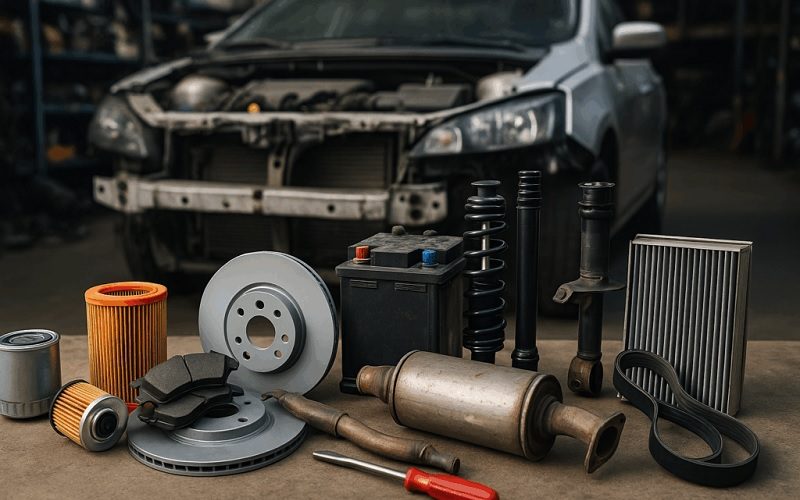
Most factory vehicles are engineered for the theoretical ideal of perfectly smooth asphalt. But for drivers navigating rutted dirt trails, aggressively potholed urban streets, or miles of washboard gravel, the reality of the daily commute is brutal on a vehicle’s mechanical foundation. Standard Original Equipment Manufacturer (OEM) parts are built to a price point and tuned for a quiet, compliant ride under normal highway conditions. When subjected to the violent, high-frequency impacts of uneven terrain, these standard components degrade rapidly.
Equipping your vehicle for harsh environments requires moving beyond basic replacement parts and investing in heavy-duty upgrades designed to withstand continuous abuse. The goal is not just to repair the vehicle when it breaks, but to fortify it against future failures. By strategically choosing aftermarket components engineered for extreme durability, you can drastically reduce long-term maintenance costs and improve vehicle control on the worst surfaces.
Upgrading the Suspension System for Maximum Durability
The suspension system is the frontline defense against road damage. It absorbs the kinetic energy of every impact, preventing those forces from tearing the chassis apart. When standard suspension components fail, the resulting shockwaves destroy wheel bearings, loosen interior panels, and compromise your ability to steer and brake safely.
Selecting the Right Shock Absorbers and Struts
Standard twin-tube shock absorbers are highly prone to a phenomenon known as shock fade. When driven aggressively over corrugated gravel or heavily potholed roads, the hydraulic fluid inside a factory twin-tube shock rapidly heats up and aerates, churning into a useless, bubbly foam that provides zero dampening force. When this happens, the vehicle will bounce uncontrollably.
To combat this, upgrade to a monotube shock absorber. Monotube designs feature a much larger fluid capacity and physically separate the hydraulic oil from the nitrogen gas chamber using a floating piston. This intelligent design completely eliminates oil aeration, ensuring consistent dampening performance regardless of how violent the road surface becomes. For extreme, high-speed rough road driving, consider shocks with external remote reservoirs. These reservoirs drastically increase the overall fluid capacity and cooling efficiency, allowing the shock to absorb brutal impacts for hours without overheating.
Polyurethane vs. Rubber Bushings
Bushings are the flexible cushions that isolate suspension components from the vehicle’s metal frame. Factory rubber bushings are soft and prioritize a quiet cabin, but they tear, deform, and dry-rot quickly under heavy suspension articulation and constant impacts.
Replacing worn factory rubber with polyurethane bushings is a massive upgrade for rough road durability. Polyurethane is virtually impervious to road salt, engine oil, and extreme temperature fluctuations. While it transfers slightly more road vibration into the passenger cabin, polyurethane keeps the suspension geometry perfectly aligned under heavy dynamic loads. This prevents premature tire wear, eliminates sloppy steering response, and ensures the vehicle tracks straight when braking hard on a bumpy surface.
Fortifying Steering Linkages and Ball Joints
Rough roads transmit immense lateral forces directly into the steering rack. Every time a front tire strikes a deep rut, the tie rod ends and ball joints absorb the brunt of that impact. Factory steering linkages often utilize thin stamped metal and feature sealed ball joints filled with a lifetime grease that eventually washes out or dries up, leading to metal-on-metal grinding.
When replacing ball joints, pitman arms, and tie rod ends, look for heavy-duty aftermarket options constructed from forged steel. More importantly, prioritize greasable steering components. A greasable ball joint features a Zerk fitting, allowing you to pump fresh chassis grease into the joint during routine maintenance. This simple action forces out water, abrasive dirt, and old contaminated grease, exponentially extending the lifespan of the component in dusty or muddy environments. Additionally, adding a heavy-duty steering stabilizer acts like a horizontal shock absorber for your steering linkage, mitigating the harsh side-to-side jerking of the steering wheel when the tires hunt for traction on uneven terrain.
Choosing Tires Engineered for Punishment
Upgrading your mechanical components is useless if your tires cannot survive the journey. Highway terrain tires feature soft, flexible sidewalls and tight tread blocks designed exclusively for fuel efficiency and low road noise. On jagged gravel or pothole-ridden streets, these highway tires are highly susceptible to sidewall blowouts, pinch flats, and severe tread chunking.
If you frequently drive on rough roads, transition immediately to an All-Terrain (A/T) tire. High-quality all-terrain tires feature reinforced sidewalls with a higher ply rating, making them significantly more resistant to punctures from sharp rocks and structural failures from deep potholes.
Look for A/T tires with integrated stone ejectors. These are small raised ridges molded between the tread blocks that physically push gravel out of the grooves as the tire rotates. This clever feature prevents sharp stones from drilling down into the tire carcass and causing a slow, undetectable leak. Furthermore, the specialized rubber compounds used in premium A/T tires are chemically formulated to resist chipping and tearing, ensuring the tire maintains its structural integrity even after thousands of miles of grinding on abrasive surfaces.
Enhancing the Braking System for Debris and Heat
Braking performance degrades heavily in dirty, rough environments. Standard blank brake rotors easily trap mud, gravel dust, and standing water between the brake pad and the smooth metal rotor surface. This abrasive mixture deeply scores the rotors and causes the brake pads to glaze over with intense heat, drastically reducing your stopping power when you need it most.
For vehicles operating primarily on unpaved or heavily degraded roads, slotted brake rotors are an excellent replacement choice. The machined slots milled into the surface of the rotor act exactly like wiper blades, constantly clearing water, dust, and hot friction gases away from the contact surface. This ensures that the brake pad always bites into clean metal.
Pair these upgraded rotors with high-quality semi-metallic brake pads. While ceramic pads are popular on luxury cars for producing less visible brake dust, semi-metallic pads perform significantly better in a wide range of temperatures. They are also much more physically resilient against the abrasive grit kicked up by dirt roads, providing a firmer brake pedal feel and superior longevity in harsh environments.
Protecting the Undercarriage and Drivetrain
When a vehicle bottoms out on a jagged rock or drops violently over the sharp edge of a frost heave, the fragile oil pan and transmission are completely exposed to the impact. Replacing torn factory plastic splash guards with heavy-duty metal underbody protection is a vital preventative measure that can save you from catastrophic engine failure.
Invest in thick aluminum or steel skid plates. These plates bolt securely to the vehicle’s strongest frame points, creating a physical armor barrier that deflects direct impacts away from the aluminum oil pan, transmission housing, and lower radiator hoses.
Similarly, replacing standard stamped steel differential covers with heavy-duty nodular iron or reinforced cast aluminum covers is highly recommended. These upgraded covers prevent the delicate differential ring and pinion gears from being crushed if the rear axle drags over a large obstacle. As an added benefit, these aftermarket covers often feature internal baffles to direct oil flow and external cooling fins that help dissipate the high heat generated by the gears pushing the vehicle through difficult terrain.
Adapting Filtration and Fluid Management
Rough roads are inherently dirty roads. Vehicles trailing behind other traffic on dry, unpaved surfaces are constantly inhaling thick clouds of abrasive silica dust. Factory paper air filters clog rapidly in these conditions, effectively starving the engine of oxygen, triggering check engine lights, and severely reducing both horsepower and fuel economy.
Replace standard disposable paper filters with a high-capacity, reusable foam or cotton-gauze air filter. These specialized performance filters are often treated with a sticky, proprietary filtration oil that captures and holds microscopic dust particles long before they can bypass the filter and scar the engine’s internal cylinder walls.
Furthermore, the constant jarring and heavy workloads associated with rough-road driving generate excess heat within the engine, transmission, and axles. Upgrading all vital fluids to full synthetic formulations is a critical final step. Synthetic oils possess superior molecular stability. They will not break down, foam, or shear under extreme thermal stress, providing maximum lubrication to your newly upgraded internal components when they are working their hardest against the terrain.
Replacing broken parts with standard equivalents simply traps you in an endless cycle of failure and repair. A vehicle that spends its life battling severe road imperfections requires a fundamental shift in how it is maintained and equipped. By selectively upgrading to heavier-duty suspension components, reinforced steering linkages, durable all-terrain tires, and protective undercarriage armor, you transform the vehicle from a fragile commuter into a resilient, capable machine.