
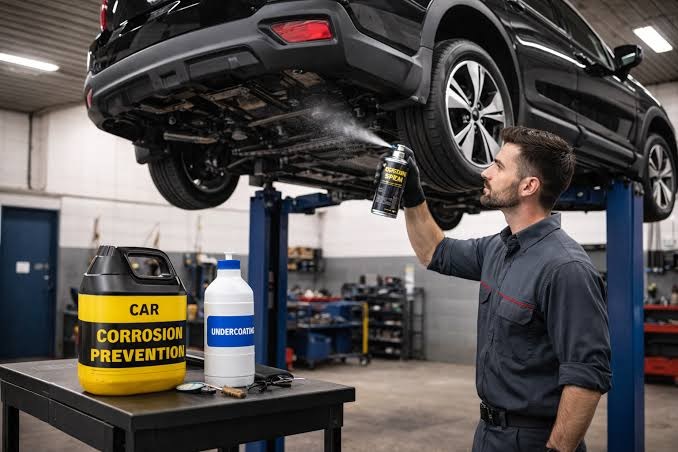
Most vehicles are not forced off the road by catastrophic engine failure or disintegrated transmissions. Instead, they are slowly consumed from the bottom up by a relentless, silent chemical reaction. Corrosion is the natural enemy of automotive longevity, fundamentally degrading the structural integrity, safety mechanisms, and reliability of a vehicle over time. While mechanical wear is predictable and often manageable through routine maintenance, rust operates invisibly inside frame rails, beneath plastic underbody shields, and across critical fluid lines.
Understanding how corrosion attacks a vehicle and implementing robust protection strategies is the single most effective way to extend the working life of an automobile, particularly for those operating in harsh climates. A well-protected chassis does not just preserve the aesthetic value of a car; it ensures that the mechanical components attached to it can safely perform their jobs for hundreds of thousands of miles.
The Chemistry of Automotive Corrosion
To effectively combat rust, one must understand how it forms in an automotive environment. Corrosion is an electrochemical process that occurs when iron alloys, such as the steel used in a vehicle’s chassis, are exposed to oxygen and moisture. This reaction creates iron oxide, commonly known as rust. Unlike aluminum oxidation, which forms a hard protective surface layer, iron oxide is porous and flaky. As rust forms, it expands and flakes away, continuously exposing fresh, virgin steel to the elements until the metal is entirely consumed.
This process is dramatically accelerated by the presence of electrolytes. In the automotive world, the most common electrolyte is road salt. When winter precipitation mixes with sodium chloride or modern liquid de-icing brines like magnesium chloride, it creates a highly conductive slurry. This moisture is kicked up by the tires and forced under high pressure into every crevice, pinch weld, and drainage hole in the vehicle’s undercarriage. Magnesium chloride is particularly devastating because it is highly hygroscopic, meaning it actively draws moisture out of the ambient air. A vehicle coated in this brine will continue to rust even when parked inside a dry, heated garage.
Vulnerable Components and the Consequences of Neglect
Automotive corrosion does not attack evenly. It targets specific high-stress and exposed areas of the vehicle, often with severe safety and financial implications.
The Subframe and Unibody Chassis
Modern vehicles utilize a unibody construction, meaning the frame and the body of the car are integrated into a single structural unit. The rigidity of this structure relies on precisely stamped steel panels welded together. When rust compromises the pinch welds or eats through the primary frame rails, the vehicle loses its structural stiffness. In a severe collision, a heavily corroded unibody will fold and collapse rather than transferring the impact energy around the passenger cabin as engineered.
Furthermore, the subframe—the heavy steel cradle that holds the engine, transmission, and steering rack—is highly susceptible to rust scaling. As the steel thins out from corrosion, the mounting points for the suspension control arms become dangerously weak. A sudden pothole impact on a rusted subframe can cause a lower control arm to completely detach, resulting in an immediate and catastrophic loss of steering control.
Hydraulic Brake and Fuel Lines
Tucked tightly against the floorpans are the vehicle’s hydraulic brake lines and pressurized fuel lines. These components are constructed from thin-walled steel tubing. Because they are located in the direct firing line of road debris and salt spray, they frequently suffer from deep pitting.
Brake lines operate under immense hydraulic pressure during panic stops. A microscopic rust pit that has eaten halfway through the wall of a brake line is a ticking time bomb. When the driver presses the brake pedal hard, the line ruptures, dumping hydraulic fluid onto the road and instantly neutralizing the vehicle’s braking capability. Similarly, a rusted fuel line will begin to weep highly pressurized, atomized gasoline onto hot exhaust components, presenting a massive fire hazard.
Electrical Grounds and Sensor Networks
Modern automobiles are rolling computer networks, relying on dozens of sensors communicating via precise voltage signals. The entire metal chassis of the car serves as the negative ground path for this electrical system. When corrosion sets in between a grounding strap and the steel chassis, the rust acts as a physical insulator. This creates heavy electrical resistance, resulting in voltage drops that cause sensors to read incorrectly, alternators to overwork themselves, and engine control modules to throw erratic diagnostic trouble codes. Protecting these grounding points from oxidation prevents weeks of frustrating and expensive electrical troubleshooting.
Factory Defenses vs. Real-World Driving Conditions
Automakers are fully aware of the corrosion problem and build vehicles with a strong baseline of defense. The majority of steel used in modern car manufacturing is galvanized, meaning it is dipped in molten zinc. Zinc is a highly reactive metal that acts as a sacrificial anode; it will oxidize and corrode before the underlying steel does. Additionally, the bare metal chassis is submerged in an electrophoretic e-coat bath that electrically bonds primer to every surface before the final paint and clear coat are applied.
However, factory protection has strict limitations. A vehicle traveling at highway speeds is constantly bombarded by sand, gravel, and road debris. This acts like a continuous sandblaster against the undercarriage, chipping away the factory e-coat and zinc plating. Once a rock chips the paint down to bare metal, salt and moisture enter the wound. The rust then begins to creep laterally underneath the healthy paint, bubbling and blistering the coating from the inside out. Factory protection is generally designed to survive a ten-year lifespan; for owners looking to keep their vehicles for fifteen or twenty years, aftermarket intervention is mandatory.
The Role of Aftermarket Corrosion Protection
Extending the working life of vehicle components requires applying secondary defensive layers that can withstand the physical abuse of the road. Not all rust protection methods are created equal, and choosing the wrong type can actually accelerate the destruction of the vehicle.
Hard Rubberized Undercoatings
Historically, automotive dealerships sold hard, rubberized or asphalt-based undercoatings as the ultimate rust protection. When sprayed onto a brand-new, perfectly clean chassis, these thick coatings create an impenetrable physical barrier against rocks and salt.
However, they share a fatal flaw: they dry hard and eventually crack. As the vehicle chassis naturally flexes over bumps, microscopic fissures form in the hard rubber coating. Salty water finds its way into these cracks and becomes trapped against the steel. Because the rubber coating prevents the metal from ever drying out, the chassis rots at an accelerated pace, entirely hidden behind a wall of black rubber that looks perfectly intact to the naked eye.
Fluid-Based Rust Inhibitors
The modern gold standard for extending component life is the use of non-drying, oil-based or lanolin-based rust inhibitors. These viscous fluids are sprayed under high pressure into the inner cavities of the frame, inside the doors, and across the entire exposed undercarriage.
Unlike hard rubber, fluid-based inhibitors remain active and self-healing. Because they never fully dry, they maintain an incredible creeping ability through capillary action. The oil migrates upward, fighting gravity to penetrate deep into pinch welds and folded steel seams where moisture naturally collects. If a rock strikes a component protected by a lanolin spray, the fluid simply flows back over the exposed area, instantly resealing the wound.
Furthermore, these products act as exceptional moisture displacers. If applied to a vehicle that already has surface rust, the oil will soak through the porous iron oxide, push the trapped water out, and seal the metal off from the oxygen supply, completely halting the chemical reaction. While fluid-based coatings must be reapplied annually prior to the winter season, their ability to keep brake lines pristine, subframes solid, and suspension bolts easily removable makes them the most effective preventative maintenance tool available.
The Long-Term Return on Investment
Implementing a rigorous corrosion protection strategy drastically changes the financial trajectory of vehicle ownership. The cost of replacing a heavily rusted suspension crossmember, routing entirely new hard brake lines, and cutting out rotted rocker panels easily exceeds the current market value of an older vehicle, forcing it prematurely into a salvage yard.
By aggressively protecting the undercarriage, you preserve the tensile strength of the vehicle’s structural components and ensure that routine mechanical repairs remain straightforward. A mechanic can quickly unbolt a shock absorber on a well-oiled chassis, whereas a rusted, seized bolt requires hours of labor involving oxy-acetylene torches and heavy extraction tools. Ultimately, corrosion protection is not just about saving the metal; it is about preserving the safety, reliability, and financial equity of the machine for decades to come.