
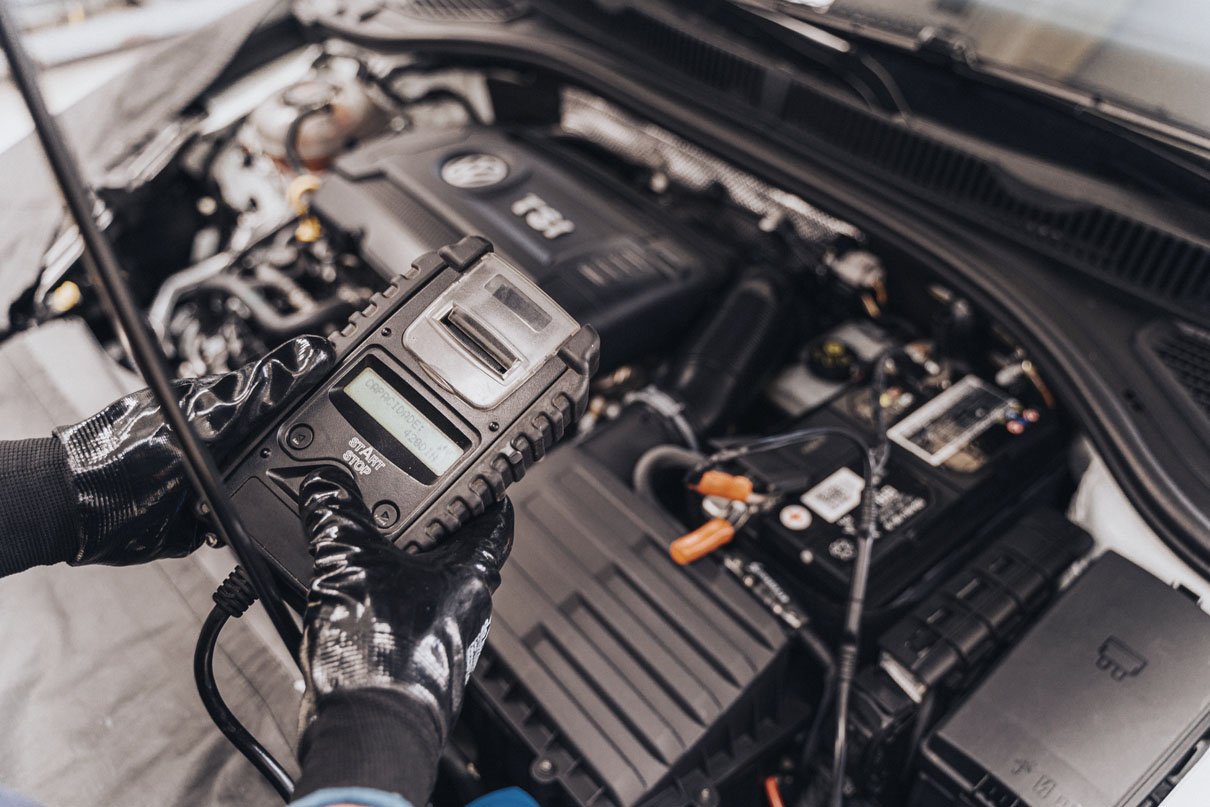
Replacing a car battery used to be a simple job: remove the old one, drop in the new one, and drive away. In modern cars, however, it’s no longer quite so straightforward. Vehicles fitted with advanced electronics and start-stop systems rely on a battery management system (BMS) that constantly monitors the health, age, and performance of the battery. When a new unit is installed, the car’s control module needs to be told about it. This process is called battery coding, and without it, even the best replacement battery may not perform as intended.
Battery coding, sometimes referred to as battery registration, resets the vehicle’s electronic memory so it recognises the new battery and adapts its charging behaviour accordingly. The system keeps track of charging cycles and capacity, and if it continues to believe that an old, worn-out battery is still in place, it may overcharge, undercharge, or mismanage the alternator. That can lead to reduced performance, poor fuel efficiency, or even premature failure of the new battery.
The process itself is relatively straightforward, though it requires more than a spanner. A compatible diagnostic scanner is needed to communicate with the car’s electronics. After installing the new battery and connecting the scanner to the OBD-II port, the software will guide you through entering the details of the new unit — such as its capacity, type, and sometimes the manufacturer’s information. Once these values are saved, the battery management system resets its data and begins monitoring the fresh installation from scratch.
Not every car requires coding. Many older models will accept a new battery without complaint, but most modern European cars, particularly those equipped with start-stop technology, do. Brands like BMW, Audi, Volkswagen, and Mercedes-Benz are well known for this requirement. Even if a car starts and runs after a battery change without coding, problems can appear later, from unexplained warning lights to charging issues that shorten the life of the replacement battery.
There are common pitfalls to avoid. Entering the wrong battery type or capacity can cause as much trouble as skipping the process altogether, because the system will attempt to charge in a way that doesn’t suit the battery installed. Interruptions during coding, often caused by voltage drops, can also corrupt the data being written, which is why professionals use a stable power supply or battery support unit during the procedure. And of course, not every diagnostic scanner has the ability to perform coding, so choosing the right tool is essential.
Although it may sound like an unnecessary complication, battery coding is simply part of maintaining today’s electronically complex vehicles. It protects the investment in a new battery, ensures that the alternator and charging system work as intended, and helps prevent faults that could otherwise leave you stranded. For those confident with car diagnostic equipment, coding can be done at home using the same tools used by workshops, or you may prefer a workshop to carry it out as part of the battery replacement. Either way, it is a step that should not be overlooked.